
Two Very Different Papers for Colored Pencil
Testing out two papers for colored pencil that have distinctive styles - smooth vs velvety - and neither was created for colored pencil. Rising Museum Board is an archival mat board and Clairefontaine Pastelmat was to be an alternative to sanded papers for pastels.
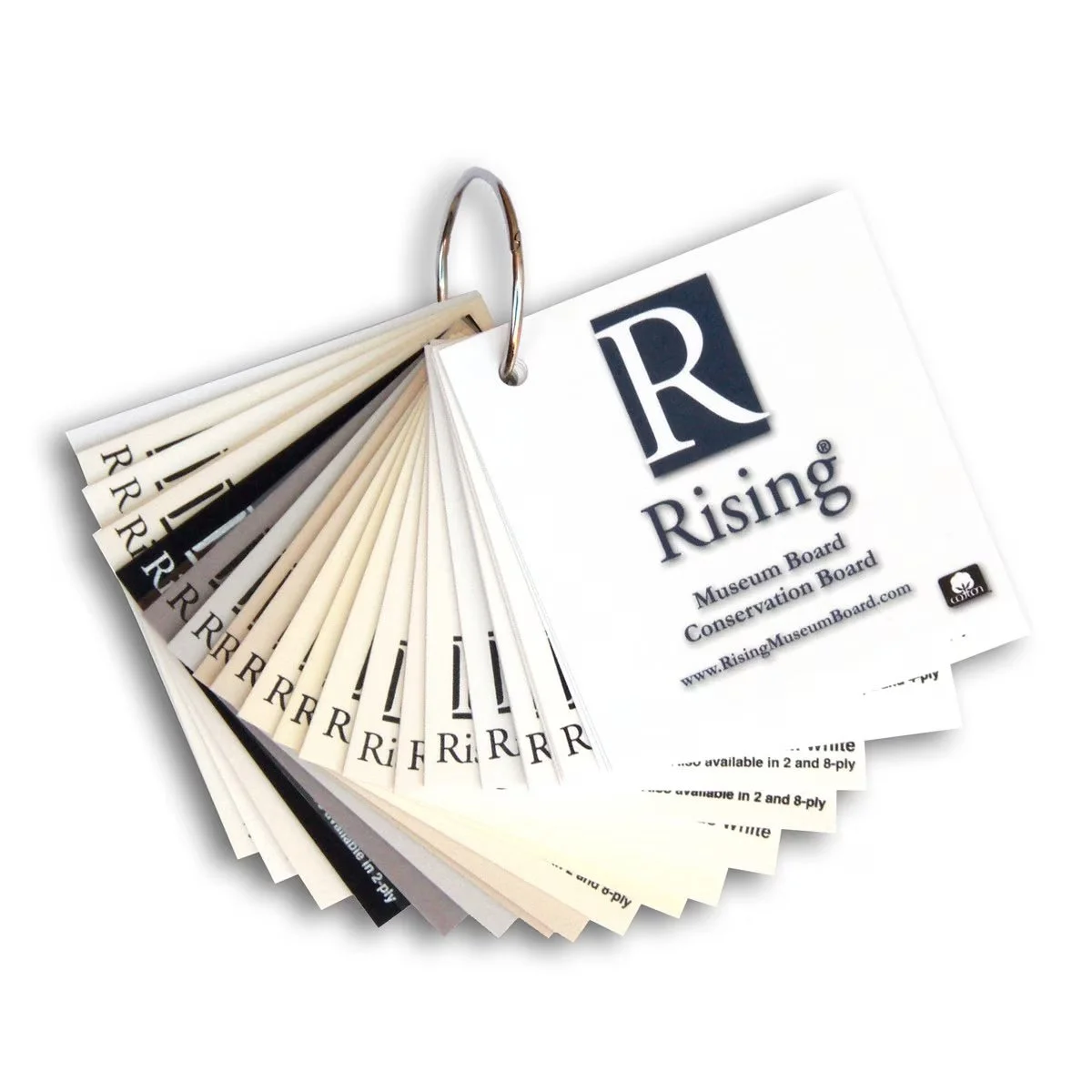
Rising Museum Board comes in a variety of colors and sizes
Legion Paper / Rising Museum Board
The history of Legion Paper was co-founded by art paper salesmen Michael Ginsburg and Len Levine in New York in March 1994. According to Legion papers, they act as a representative and distributor for more than 60 paper mills in sixteen countries.
In a 2022 video, Michael Ginsburg talked about how the Rising Museum Board developed and expanded. Rising Museum Board is a 100% cotton matting board in the framing market. He began creating this paper back in 1969-70 at a mill in Massachusetts. This mill is no longer in business and Legion Paper owns the brand and the name.
Mr. Ginsburg noted that the brand has expanded from two colors and two size to 10 color and numerous sizes including 60 x 104 inches as well as a wide variety of thickness (2-ply up to 8-ply).
Mr. Ginsburg continues to talk about Rising Museum Board as a mat board for a finished artwork. In the last 30 seconds, he does he mention that it is popular among serigraph and silkscreen artists. He did not mention of the use and popularity for pastels, colored pencil, and pan pastels artists.
There is an engaging article on their website HERE that discusses four artists’ choices for paper for colored pencil including Megan Seiter using Rising Museum Board. Here is what she says about paper for colored pencils: “I look for a paper surface that’s toothy without being heavily textured. The texture of the Rising surface is ideal for colored pencil work. It comes in several plies, and I appreciate the sturdiness of the board (it won’t buckle with watercolor). I often incorporate oil-based pencils and pastels into my drawings, and both blend beautifully on this surface. The board also works well with the Slice Tool, which is a ceramic blade that I use to lift the top layers of pencil and to carve out the veins of a leaf.”
Clairefontaine / Pastelmat
Wikipedia give a lengthy history of Clairfontaine from its 1512 origin - the authorization of a paper mill along the Valdange river, in Étival, France - through various owners until Jean-Baptiste Bichelberger took ownership of milling in the area. The Bichelberger family or its in-laws brought the milling industry from 1858 to 1996, when the publicly traded company became Exacompta Clairefontaine. FYI, the favorite artist sketchbook Stillman & Birn was brought into Clairefontaine's fine art portfolio in 2019.
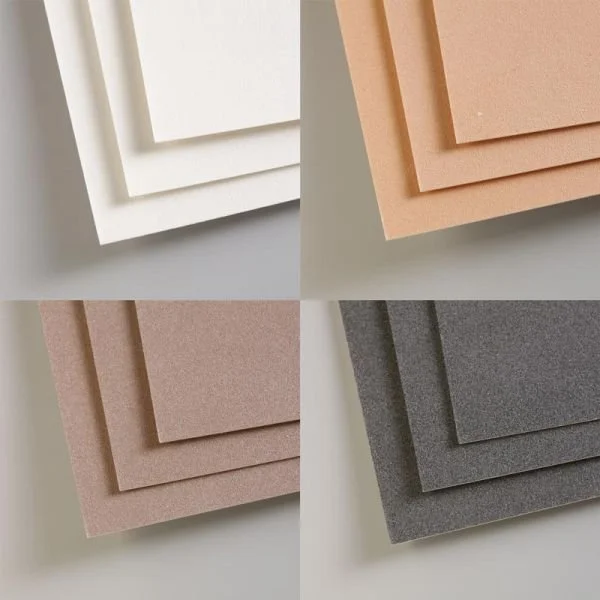
Clairefontaine Pastelmat comes in a variety of colors and sizes
The development of Pastelmat was in response to the growing demand for an alternative to traditional sanded pastel paper. Pastelmat is “an organic surface and powerful texture derived from cellulose plant fibers.” Clairefontaine gives a list of its many qualities HERE - blending, laying, erasable, ect.
The French paper manufacturer, Clairefontaine, spent several years developing the product and testing it with pastel artists before releasing it to the market in 2003.
There is no alternate resource for the date of origin than the artist, Ann Richman, in her blog.
Blick art store online states that it is acid-free and pH neutral. Clairefontaine Pastelmat can be purchased by the sheet (9-1/2" x 12-1/2” for $5.98 or 27-1/2" x 39-1/2 for $31.80) or by the pad ($36.25 - $79.94) in an assortment of colors.
Now for my own testing of this two papers for colored pencil.
The apple is on Clairefontaine Pastelmat and the cherry is on Rising Museum board. I also did color swatches for the colors for the apple and the cherry.
The top is just layering with the listed colors. The next is just using a stiff brush. The last is using a solvent - NOOD, Ultrecht No Oder Artists’ Paint Thinner.
There is little difference with the Rising Museum Board between layering, using the brush, and using the solvent. Whereas, Clairefontaine Pastelmat needed to be smoothed over to get into the nooks and crannies of the paper. The brush smooths the colors, and the solvent makes a complete cover of the paper.
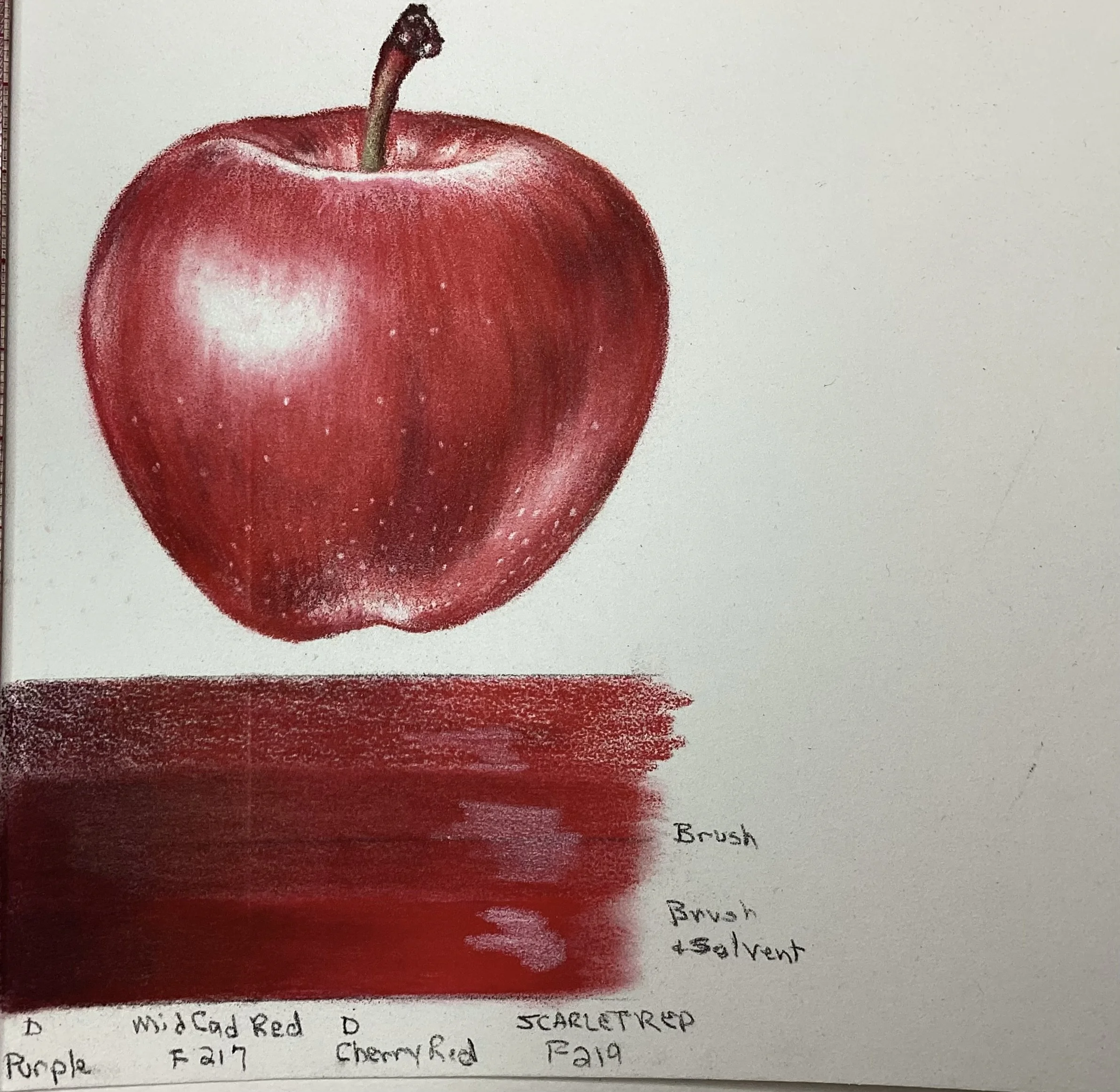
Apple on Clairefontaine Pastelmate using colored pencils
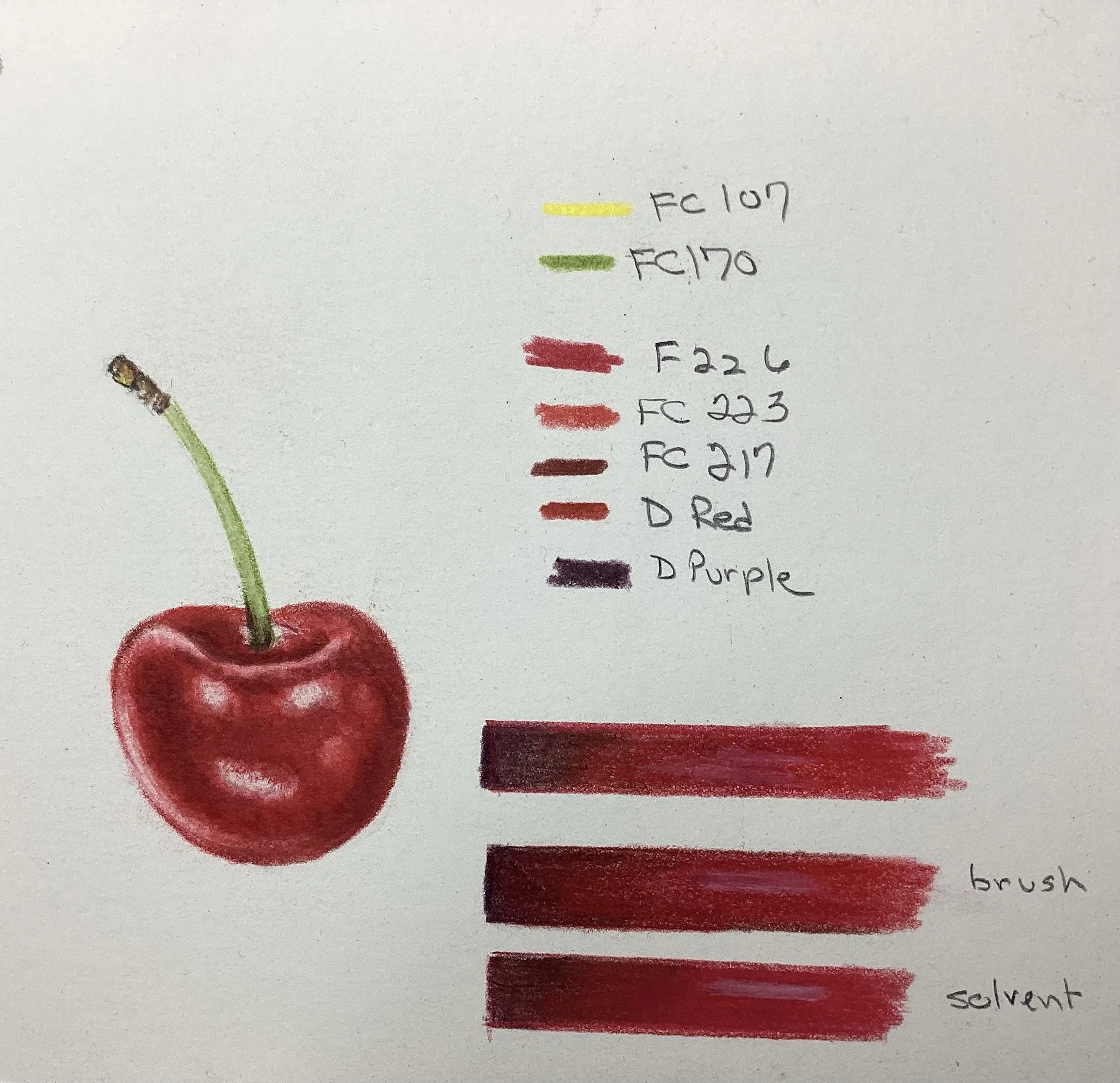
Cherry on Rising Museum Board using colored pencils
Both take many layers for depth of color. And notice how both papers can layer lighter colors on top of darker colors. Rising Museum Board is a reasonably priced, reliable, predictable, easy to work on surface. Repeat layering can leave a shine.
Pastelmat is twice the cost, velvet surface, hard to keep clean, and difficult to make clean edges. However, the photo does not do justice to the results working with this paper can achieve. Colored pencil goes on as smoothly as . . . well . . . pastels.