
Ergonomic Practices for Botanical Artists
by Louise Daley*
Botanical artwork demands an extraordinary level of intensity and precision. It requires hours of highly focused, close-up work both in the field and in the studio. This intense focus often locks the artists into a static, hunched posture that takes a heavy toll on the body.
Understanding the physical strains of woking as a botanical artist and learning how to adapt your environment—no matter its limitations—is essential to protecting your longevity as an artist.
The Physical Toll of the "Hunched" Posture
When you lean forward to focus on details, your body leaves its natural alignment. This sustained position leads to several specific physical issues:
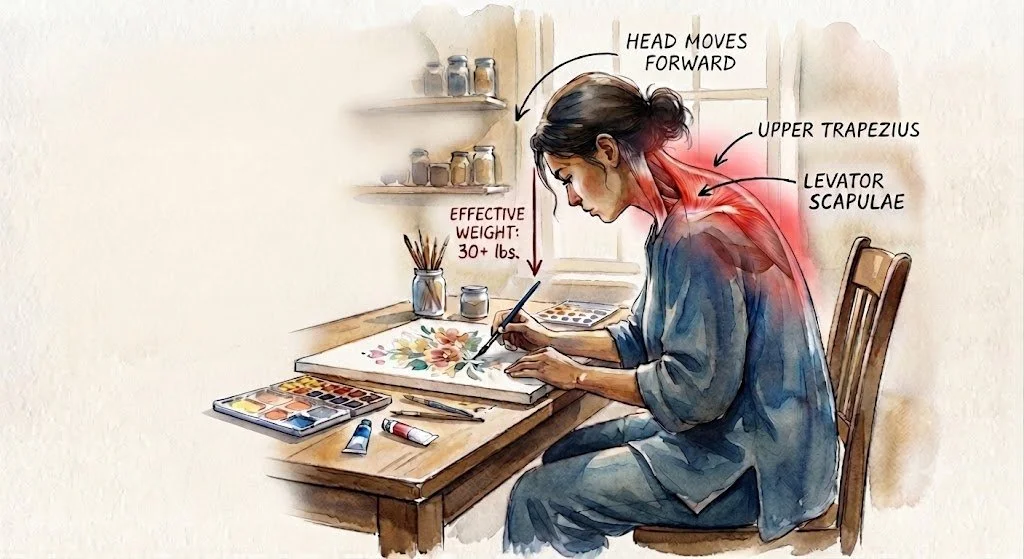
Cervical Spine Strain:
For every inch your head moves forward over your artwork, the effective weight on your neck muscles increases by roughly 10 pounds. This strains the upper trapezius and levator scapulae muscles, causing chronic stiffness and tension headaches.
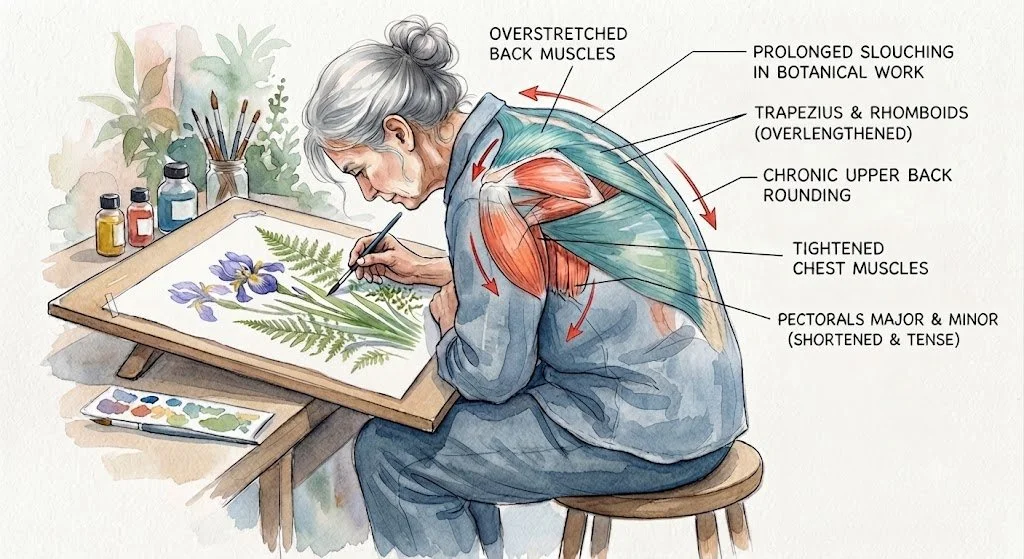
Thoracic Kyphosis:
Prolonged slouching rounds the upper back, overstretching the back muscles while tightening the chest muscles (pectorals). This imbalance can lead to permanent postural changes and a reduced range of motion.
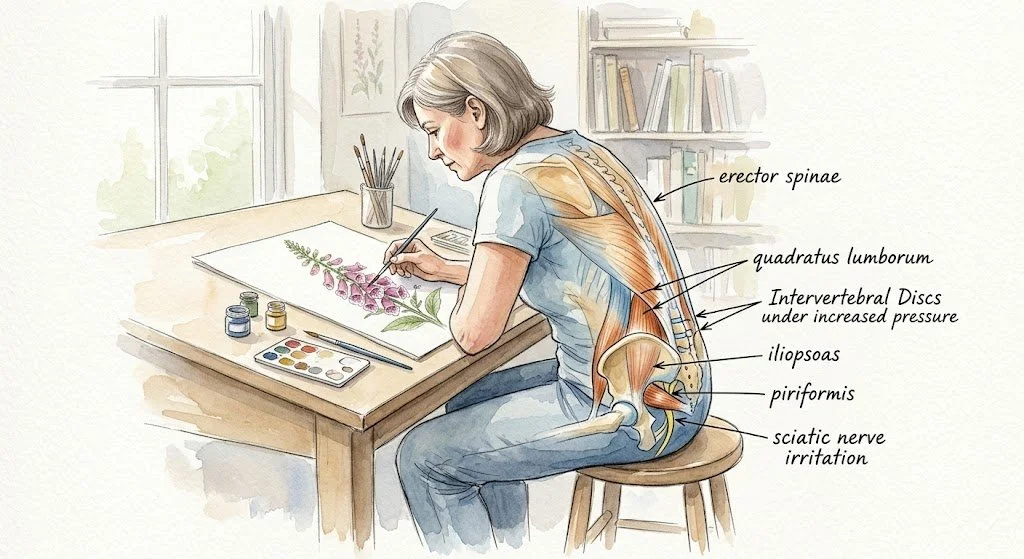
Lumbar Compression:
Sitting without proper lower back support flattens the natural inward curve of the lumbar spine. This increases pressure on the spinal discs, often resulting in lower back aches or sciatic nerve irritation.
Workspace Setup: Flat Desktops vs. Vertical Inclines
Your drawing surface directly dictates your neck angle. While workspace options can sometimes be limited by lack of space, understanding how to manage both angled and flat setups is key.
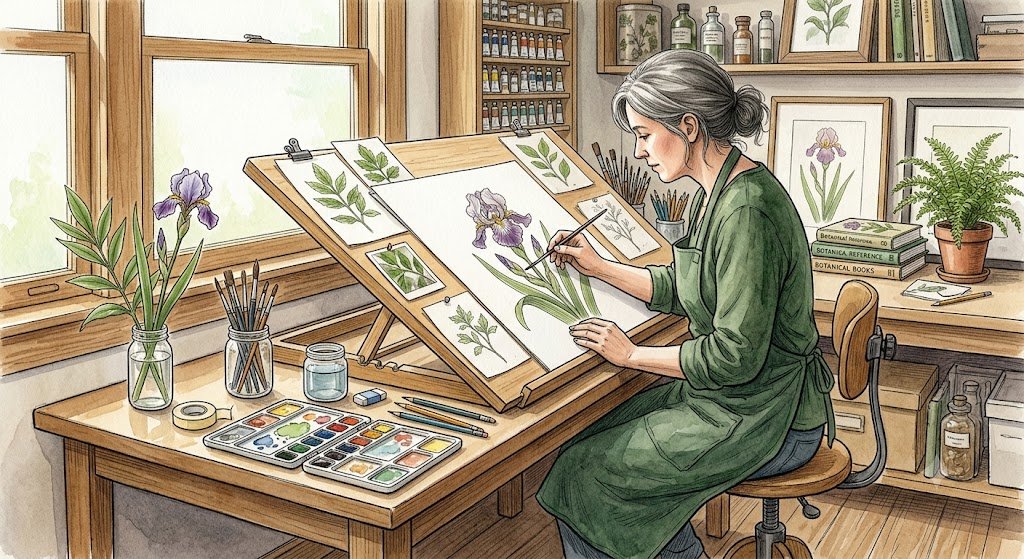
The Benefits of a Vertical or Angled Surface
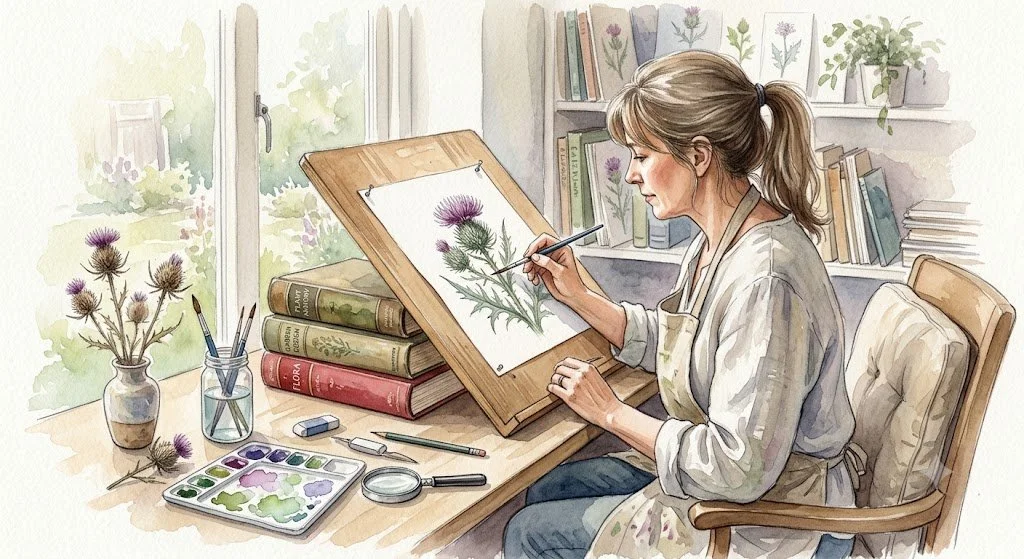
An angled drawing surface or a vertical easel, even at a slight incline (15–30 degrees) drastically reduces neck strain by bringing the work up into your natural line of sight rather than forcing your head down to the flat surface.
When working on an incline, you can keep your head upright and your spine stacked naturally over your hips. If a full drafting table isn't an option, a portable, adjustable tabletop drawing board or a simple wedge desk riser can instantly transform a standard flat desktop into an ergonomic workspace.
The Challenge of the Flat Desktop
Working on a completely flat surface forces your head to drop down and your neck to bend forward significantly. If a flat desktop is your only option, you must bring the artwork closer to your eyes rather than dropping your eyes to the artwork.
To make a flat desktop more ergonomic:
Raise your chair so your forearms rest comfortably on the table without shrugging your shoulders.
If your feet no longer touch the floor, place a flat block or footrest underneath them to support your lower back.
Prop up individual reference materials or specimens on small blocks or stands directly in front of you so you do not have to look down to see them.
Six Standing Break-Time Stretches
Even with the best ergonomic workstation, artist should be taking breaks. To reverse the compression of sitting, you need to step away from your workspace entirely. Set a timer for every 45 to 60 minutes, stand up, and perform these six restorative stretches to reset your posture:
1. The Doorway Chest Stretch
Because hunching over artwork tightens the chest and pulls the shoulders forward, opening up the pectorals is a top priority.
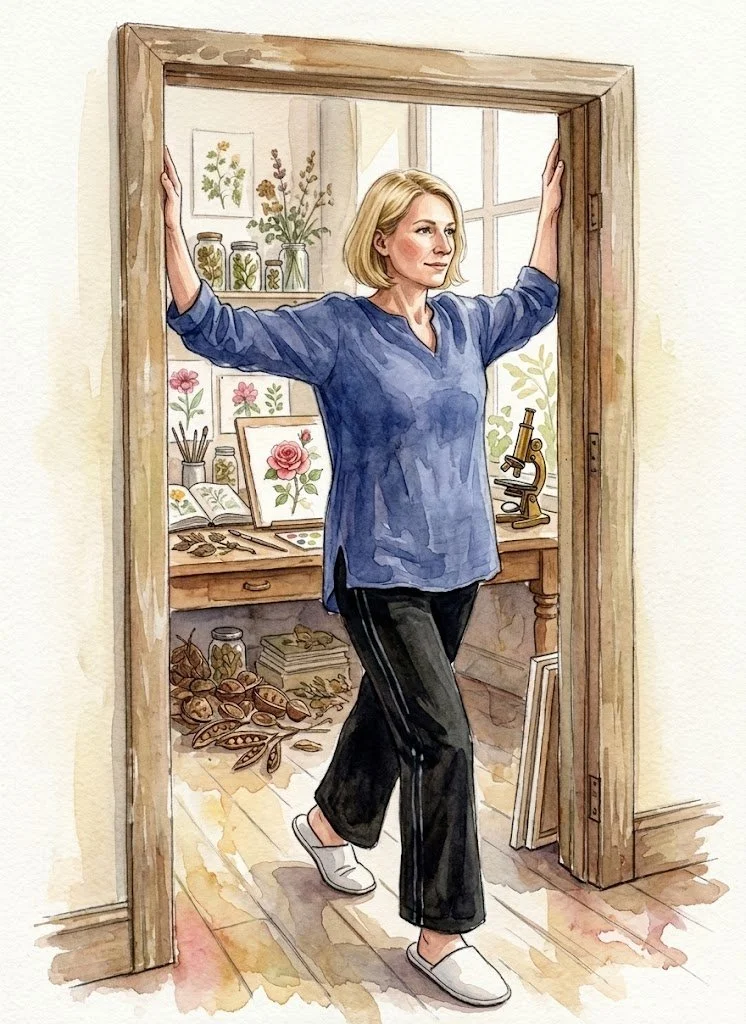
How to do it: Stand in a doorway. Place your forearms flat against the doorframe with your elbows bent at a 90-degree angle (parallel to your shoulders). Step one foot forward gently until you feel a comfortable stretch across your chest. Hold for 20–30 seconds.
Targets: This stretch targets the pectoralis major and pectoralis minor muscles. Secondary muscles that receive a stretch during this movement include the anterior deltoids (front of the shoulders) and the biceps.
2. Standing Shoulder W’s
This exercise counteracts a rounded upper back by activating the rhomboids and lower trapezius muscles between your shoulder blades.
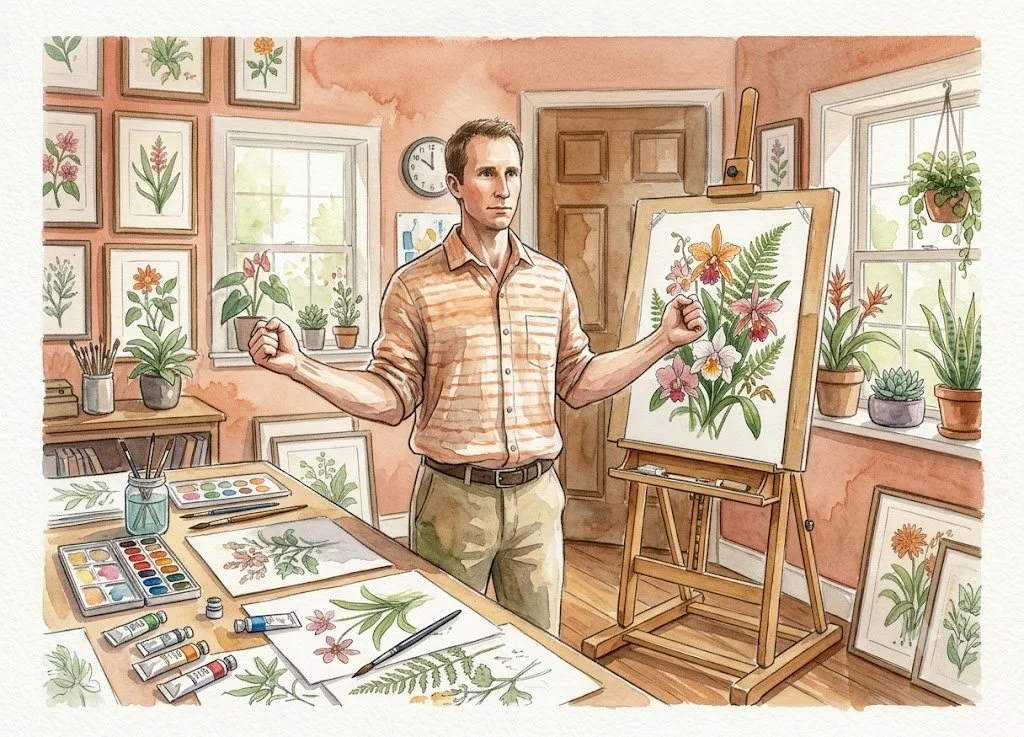
How to do it: While standing, bring your arms up against form a "W" shape (elbows bent and tucked down toward your ribs, hands up at head height). Gently squeeze your shoulder blades down and back. Hold the squeeze for 5 seconds, release, and repeat 10 times.
Targets: This stretch targets the upper back and shoulders. The exercise builds strength in the posterior deltoids (rear shoulders), rhomboids (mid-back), lower trapezius (lower shoulder blades), and the rotator cuff muscles (specifically the infraspinatus and teres minor)
3. Celestial Reach and Side Bend
This stretch decompresses the spine and opens up the intercostal muscles along the ribcage, which can become compressed when slouching to one side.
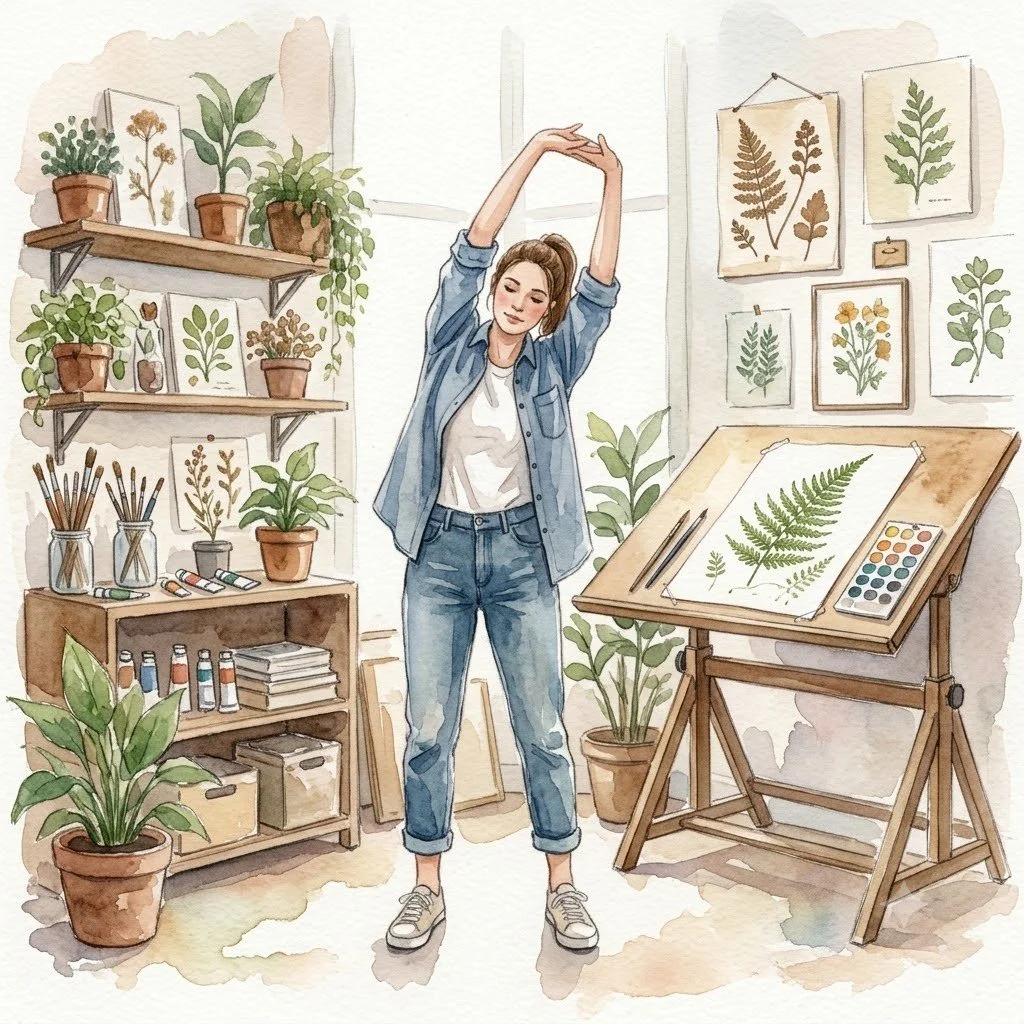
How to do it: Stand with your feet hip-width apart. Interlace your fingers, turn your palms toward the sky, and reach as high as you comfortably can to lengthen your entire torso. Keeping that height, gently lean your upper body to the right for 3 breaths, then return to the center and lean to the left.
Target: This stretch targets your core, back, and shoulders. They are excellent for lengthening the spine, alleviating stiffness from prolonged sitting, and improving overall mobility.
4. Standing Quad and Hip Flexor Stretch
Sitting keeps the hips in a constant state of flexion, which shortens the hip flexors and pulls on the lower back.
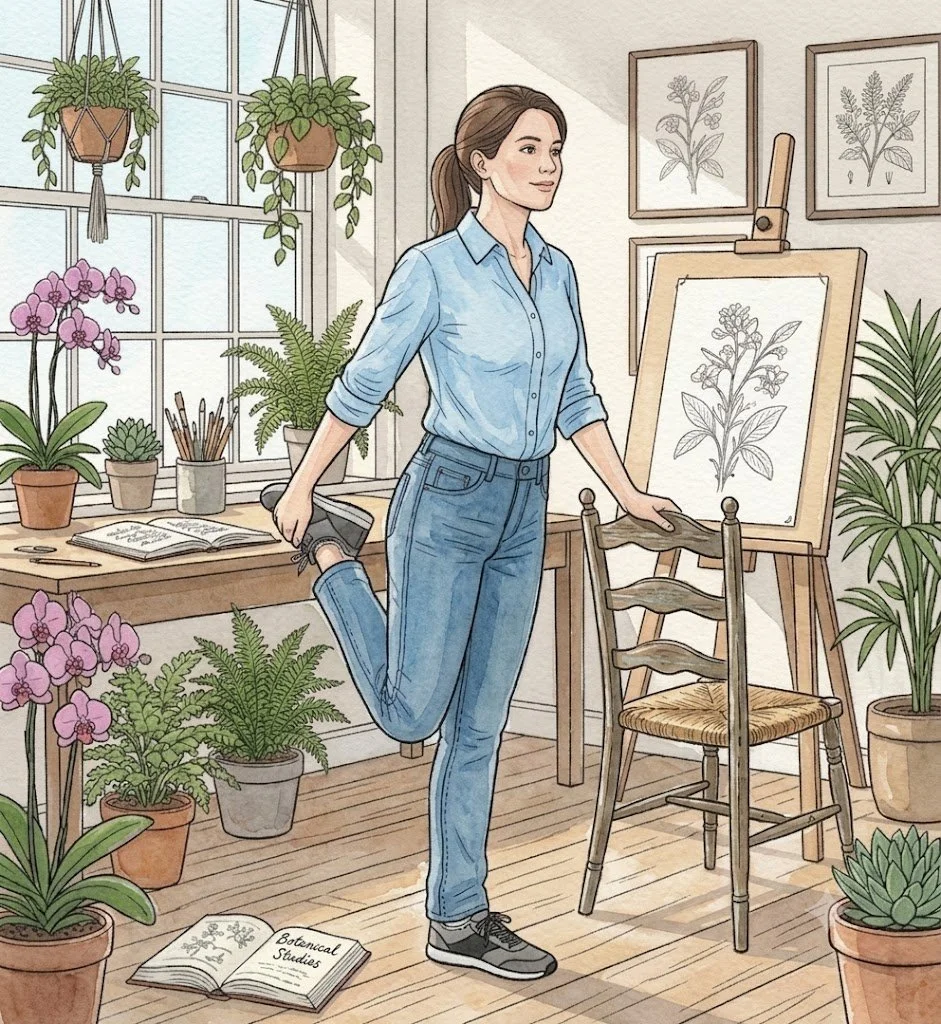
How to do it: Stand tall, holding onto a sturdy wall or chair for balance. Lift your right foot behind you and catch your ankle with your right hand. Keeping your knees close together and your torso upright, gently push your hips forward until you feel a deep stretch in the front of your thigh. Hold for 20 seconds, then switch sides.
Target: This stretch targets the hamstrings, calves, back muscles, and shoulders while challenging your core and hip stability.
5. Clasp-Behind Forward Fold
This combined movement stretches the front of the shoulders while using a gentle hang to let gravity relieve lower back compression.
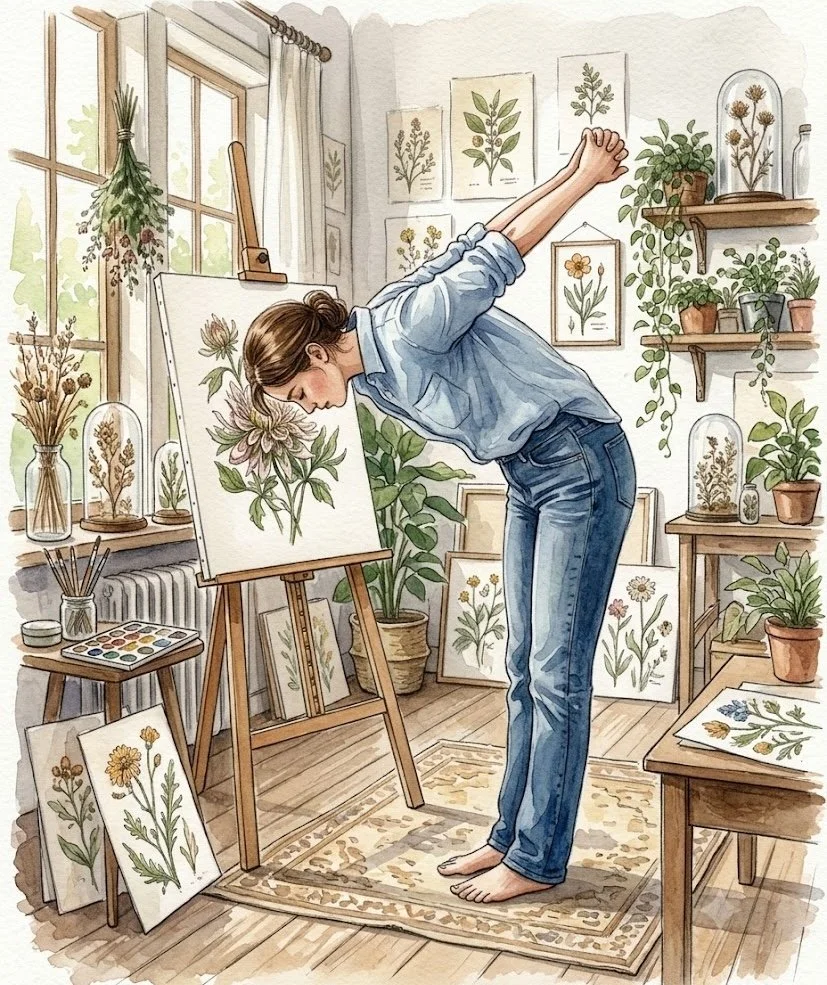
How to do it: Stand with your feet wider than hip-width apart. Clasp your hands behind your lower back, straightening your arms to open your shoulders. Soften your knees and slowly hinge at your hips, folding your torso forward. Let your head hang heavily toward the floor while letting your clasped hands fall gently forward over your back. Hold for 4–5 deep breaths, then slowly roll back up.
Target: This stretch targets the hamstrings, glutes, shoulders (deltoids), chest (pectorals), and the entire back line.
6. Wall Scapular Slides
This stretch improves shoulder mobility and releases neck tension by retraining the shoulder blades to move correctly.
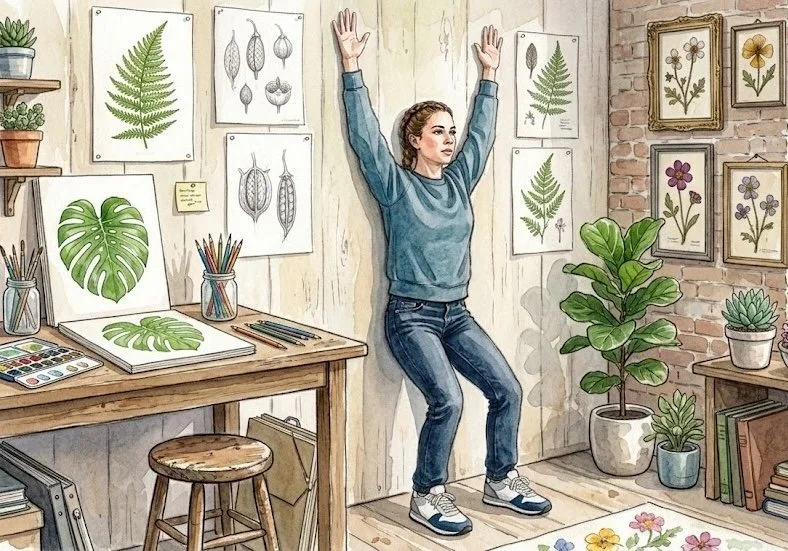
How to do it: Stand with your back, head, and heels flat against a wall (or heals away from the wall). Raise your arms out to the sides with elbows bent at 90 degrees, keeping the backs of your hands and elbows in contact with the wall. Slowly slide your hands upward into a "Y" shape, going only as high as you can without letting your back arch or your hands lift off the wall. Slide back down to the starting position and repeat 8 times.
Target: This stretch targets serratus anterior (which keeps the shoulder blades anchored to your ribcage), the lower trapezius (for shoulder blade depression and upward rotation), and the rotator cuff muscles (for shoulder stability).
A Note on Pain: Stretches should provide a gentle pulling sensation, never sharp or radiating pain. If you experience persistent numbness, tingling, or severe discomfort in your neck, back, or hands, consult a healthcare professional or physical therapist for a personalized evaluation.
*this blog was illustrated with the assistance of AI Google Gemini