
Just Two Books
by Louise Daley*
Not to many years ago, announcement about a newly published book on botanical art were few and far between, and my botanical library grew slowly and steadily. Lately, the announcements have been more frequent, and my library shelf is no longer large enough.
While it is difficult to give a definitive number of books published in the past 10 years on botanical art, there have been roughly 40 to 60 major instructional books explicitly dedicated to the practice of botanical art published globally over the last decade.
The last ten years have actually marked a modern "golden age" for botanical art instruction publishing. The botanical art instructional trends from the last decade break down into a few key areas: the definitive compendiums, the prominent masterclass and technique books, and the shift toward botanical sketchbooks and fieldwork.
Driven by a massive resurgence of interest in the genre, major organizations like the American Society of Botanical Artists (ASBA) and the Society of Botanical Artists (SBA) released what are now considered the absolute definitive masterworks on the craft.
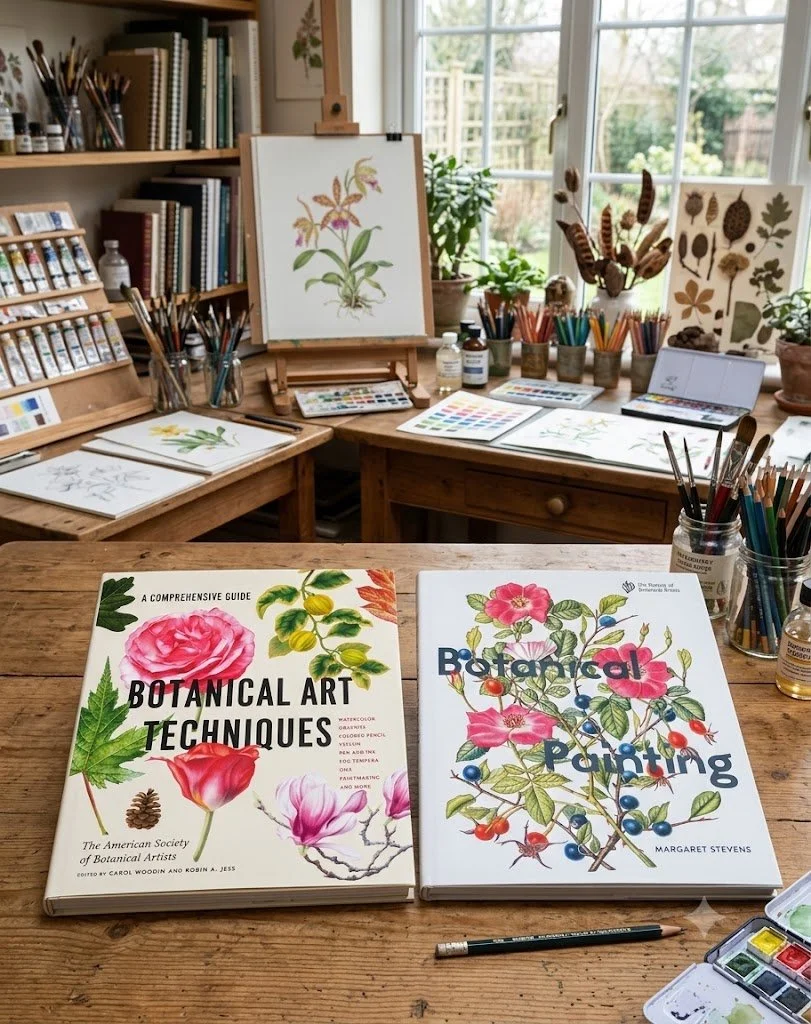
The two major compendiums in botanical art instruction are:
Botanical Art Techniquesby the American Society of Botanical Artists (2020): At around 400 pages and featuring over 900 images, it's an incredibly thorough instructional guide covering everything from watercolor and graphite to colored pencil, vellum, and pen and ink.
Botanical Painting with the Society of Botanical Artists(2018): Margaret Stevens, the author who wrote and co-ordinated the production of the two books prior books produced by the SBA - The Art of Botanical Painting and TheBotanical Palette: Colour for the Botanical Painter created this new compendium text. The current book brings together techniques, step-by-steps, and critiques from the SBA’s global network and distance-learning tutors, focusing heavily on media blending and modern plant portraiture.
Although both published a few years ago, they are still the definitive works on the subject.
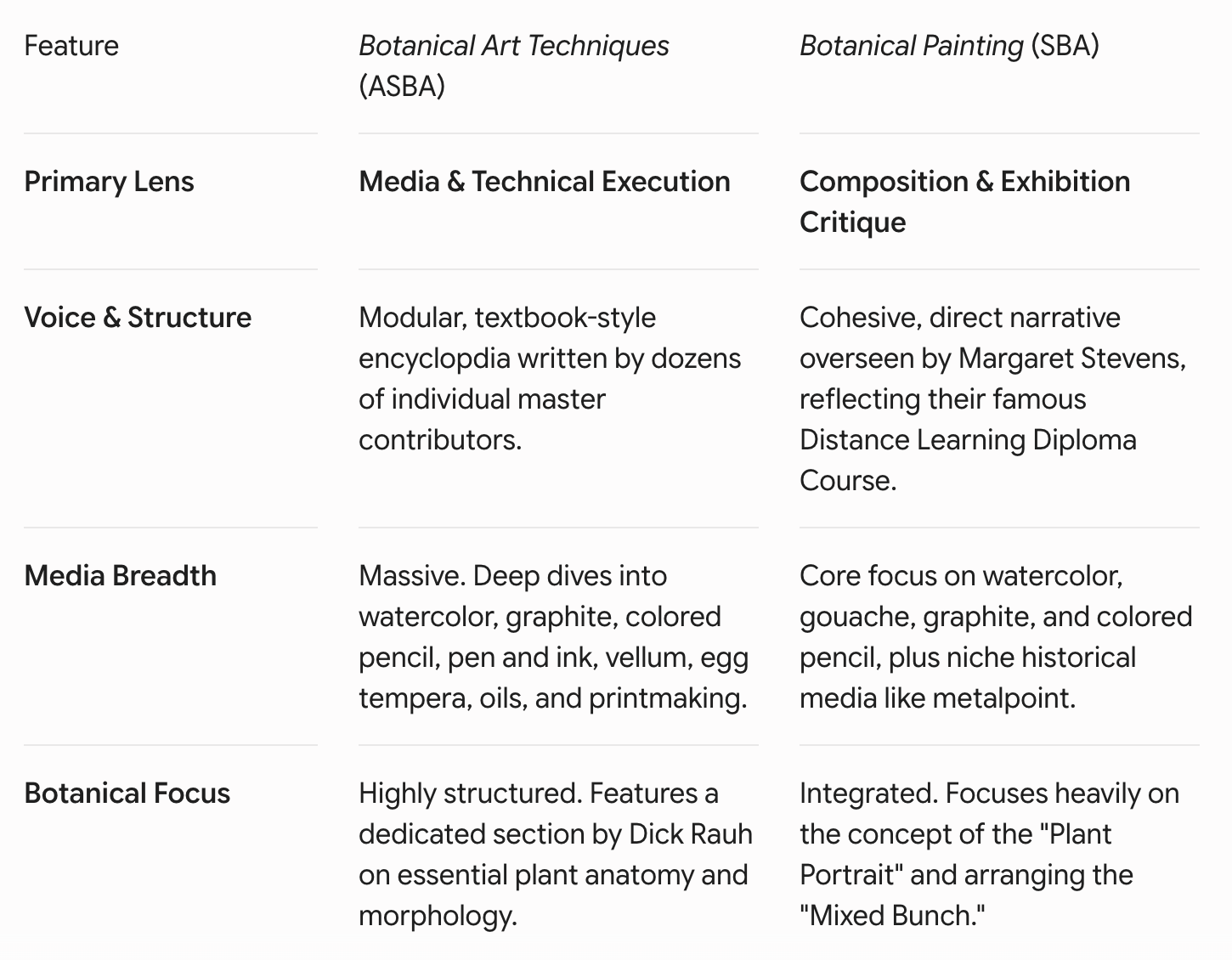
Both Botanical Art Techniques (ASBA, 2020) and Botanical Painting (SBA/Margaret Stevens, 2018) are monumental achievements. However, because they reflect the distinct philosophies of their parent organizations—the American Society of Botanical Artists and the UK-based Society of Botanical Artists—they serve very different functional purposes in an artist's studio.
The core differences lie in how they organize information and how they balance raw technical breadth against the curation of an exhibition-ready style.
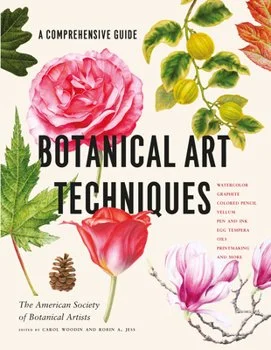
1. ASBA’s Botanical Art Techniques: The Ultimate Lab Manual
If you want to understand the exact mechanics of a medium, the ASBA compendium is unparalleled. It is structured like a masterclass curriculum.
The Multi-Media Deep Dive: While many books treat colored pencil or ink as an afterthought to watercolor, the ASBA book gives them equal, exhaustive weight. It details exact hand positions for light graphite toning, how to maintain technical pens for precise stippling, and how to handle the unforgiving surface of calfskin vellum.
The Working Process: It excels at lifting the curtain on the gritty, non-precious phase of art. For example, the composition chapters show actual working sketchbook pages with messy tracing paper overlays, demonstrating exactly how an artist tests angles and repositions stems before transferring a clean line drawing to final paper.
The Vibe: It reads like a highly supportive, incredibly detailed technical manual. It is dense with data, featuring over 900 step-by-step photographs.
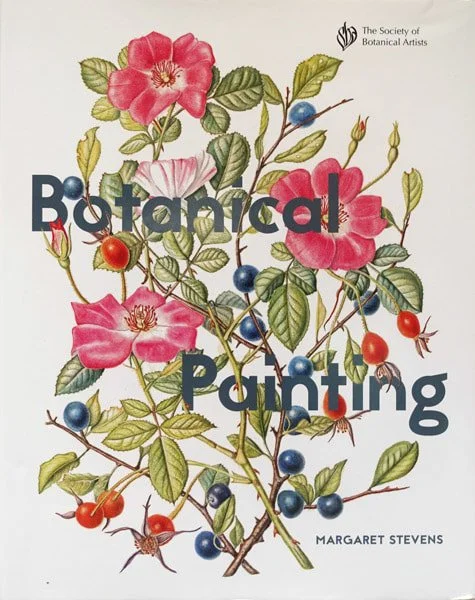
2. SBA’s Botanical Painting: The Exhibition Masterclass
The SBA book approaches the craft from the perspective of an exhibition juror and tutor. It leans heavily on the artistic philosophies championed in their rigorous global diploma program.
The "Plant Portrait" & Critique: Rather than just showing you how to render a leaf, this book focuses heavily on how to see like an elite artist. It features extensive gallery selections paired with constructive critiques, explaining exactly why a composition succeeds, how the balance of strong pigments prevents a piece from looking flat, and how to capture a "living" presence without falling into rigid, sterile stiffness.
The "Mixed Bunch" Challenge: One of its standout elements is guiding artists through complex arrangements—moving beyond a single isolated stem to managing depth, overlapping elements, and color harmony in a complex, multi-specimen painting.
The Vibe: It feels like a high-level studio tutorial with a discerning mentor looking over your shoulder. It is deeply inspiring, elegant, and highly focused on the final aesthetic presentation.
Which Belongs on Your Worktable?
Choose the ASBA Compendium if: You want a granular, technique-first reference book to solve specific studio problems (e.g., "How do I glaze watercolor over gouache without lifting the base layer?" or "What is the cleanest way to map complex light and shadow on a geometric plant form?").
Choose the SBA Compendium if: You have a handle on your basic media but want to elevate your eye for composition, study professional execution, or learn how to compose complex botanical portraits that look remarkably fresh and dynamic on the gallery wall.
*this blog was written with the assistance of AI Google Gemini