
Morton Arboretum Herbarium
Reed-Turner Botanical Artists Tour of Morton Arboretum Herbarium
by Louise Daley*
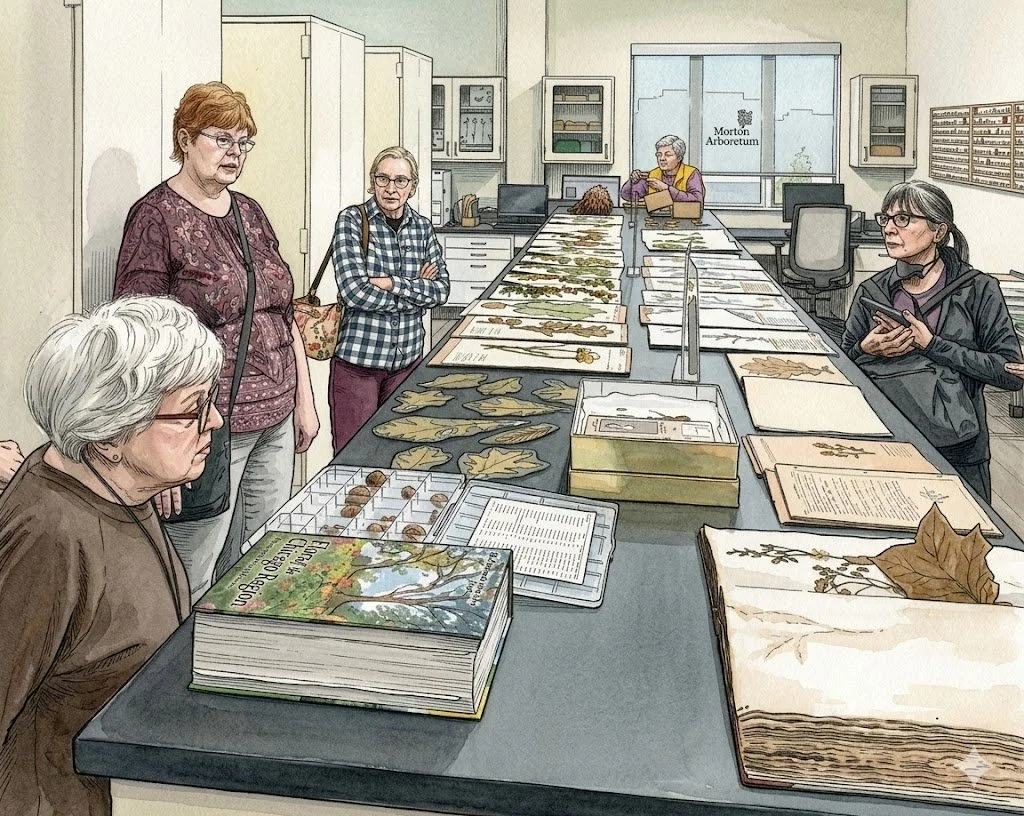
Member of Reed-Turner Botanical Artists
The Morton Arboretum Herbarium houses over 205,000 preserved specimens. While it holds plants from all over the world, it is most famous for containing the most comprehensive record of the native flora of the Chicago region.
When the Arboretum's founder, Joy Morton, established the herbarium in 1922, it was one of his top priorities. By 1929, it had reached nearly 10,000 samples. Today, it is a massive regional powerhouse and a primary contributor to vPlants, the virtual herbarium of Chicago-region flora.
On May 30, 2026, members of the Reed-Turner Botanical Artist met at Morton Arboretum Administrative and Research Center for a private tour by Herbarium Coordinator, Lindsey Worcester. (See below for a chronology of the herbarium.)
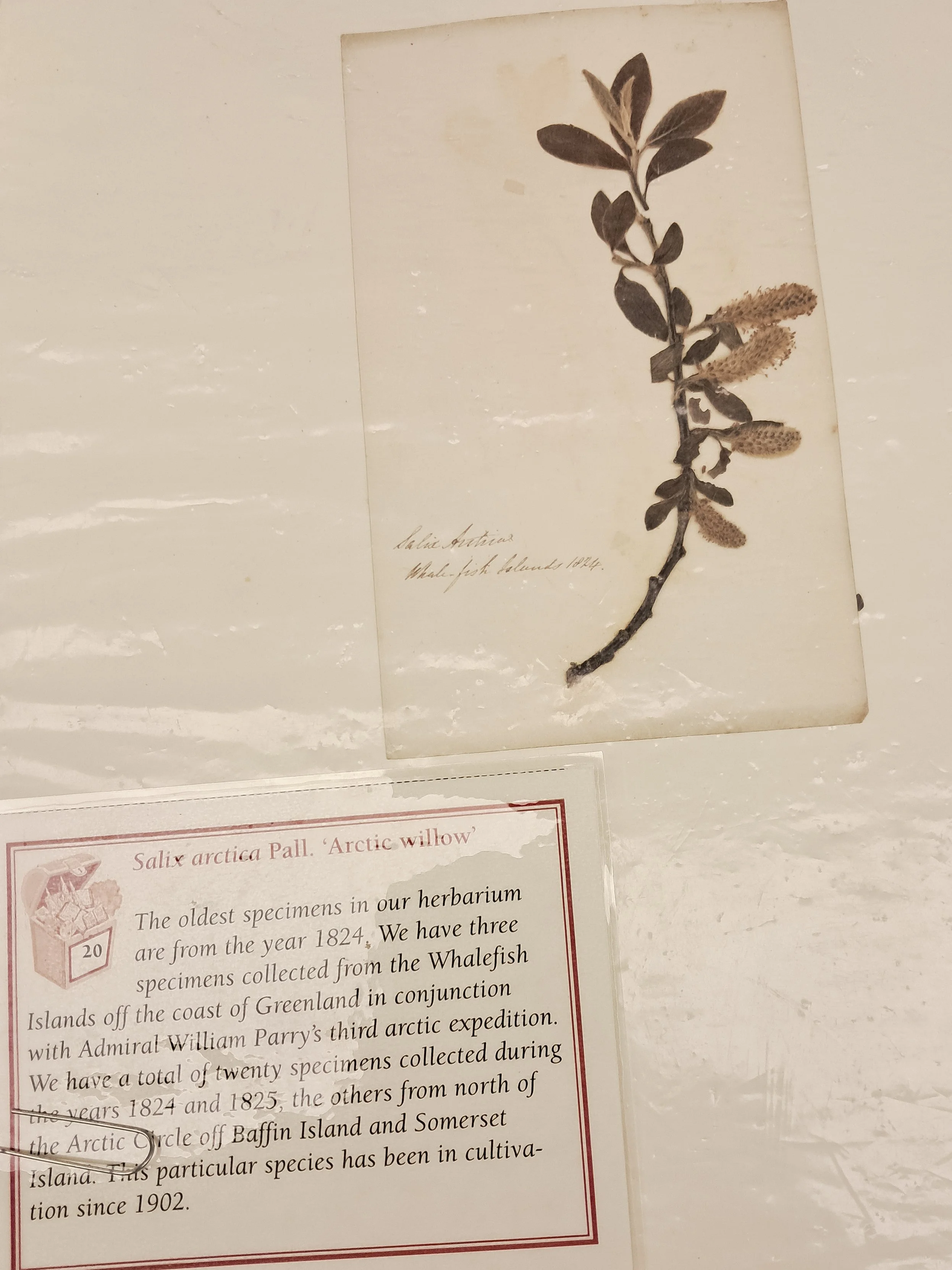
Salix arctica Pall, ‘Arctic Willow’
Whalefish Island off the coast of Greenland, 1824
Treasures on Display
The long display table featured plant specimens preserved both in historic book form and on single sheets for the group to review. The samples included the oldest specimen at Morton Arboretum — 1824, Salix arctica Pall, ‘Arctic Willow’ from Whalefish Island off the coast of Greenland.
Lindsey explained the format of the herbarium plant sheet. The physical format of a standard herbarium specimen has remained remarkably consistent for over 250 years. It bridges meticulous science with a distinct, organic aesthetic.
A properly prepared historical specimen always balances several crucial elements:
The Pressed Specimen: The plant is arranged carefully before pressing to show both the upper and lower surfaces of the leaves, as well as crucial diagnostic features like flowers, seeds, and root structures.
The Label (The Data): The lower right corner features a label documenting the exact scientific name, the location it was found, the collection date, the habitat type, and the collector's name.
Archival Precision: Historically attached using glue, thread, or small strips of paper tape, the specimen is mounted on heavy, acid-free paper designed to last for centuries if kept dark and dry.
Dried plant specimens are remarkably resilient. If kept free from moisture and pests (like dermestid beetles), a herbarium sheet can easily preserve a plant's structural details and color variations for hundreds of years.
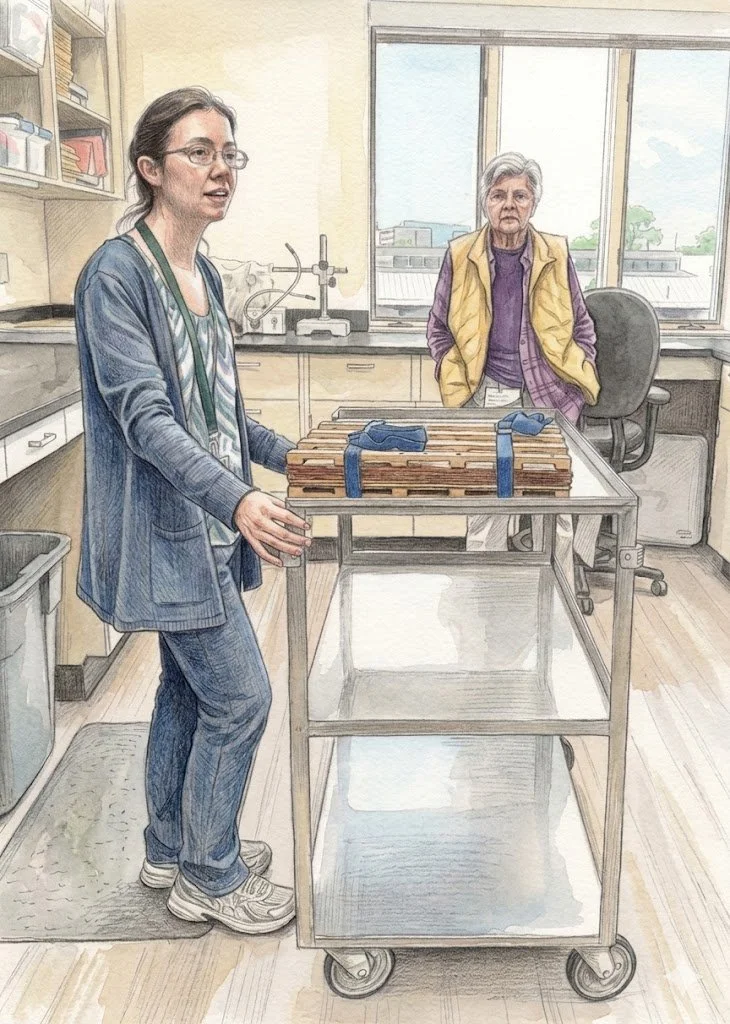
Lindsey Worcester demonstrating the method of drying plant specimens
The Craft of Preservation
Lindsey demonstrated the actual creation of a professional herbarium sheet—an art form that has changed very little since the 18th century. She shared insider techniques, including the clever use of foam pieces to cushion and protect bulky specimens under pressure, and showed the specific archival papers and glues utilized by the lab. We even got a peek at the Arboretum's massive, refrigerator-sized specimen dryer. (See below for the method of collecting and preserving specimens.)
Bringing History into the Digital Age
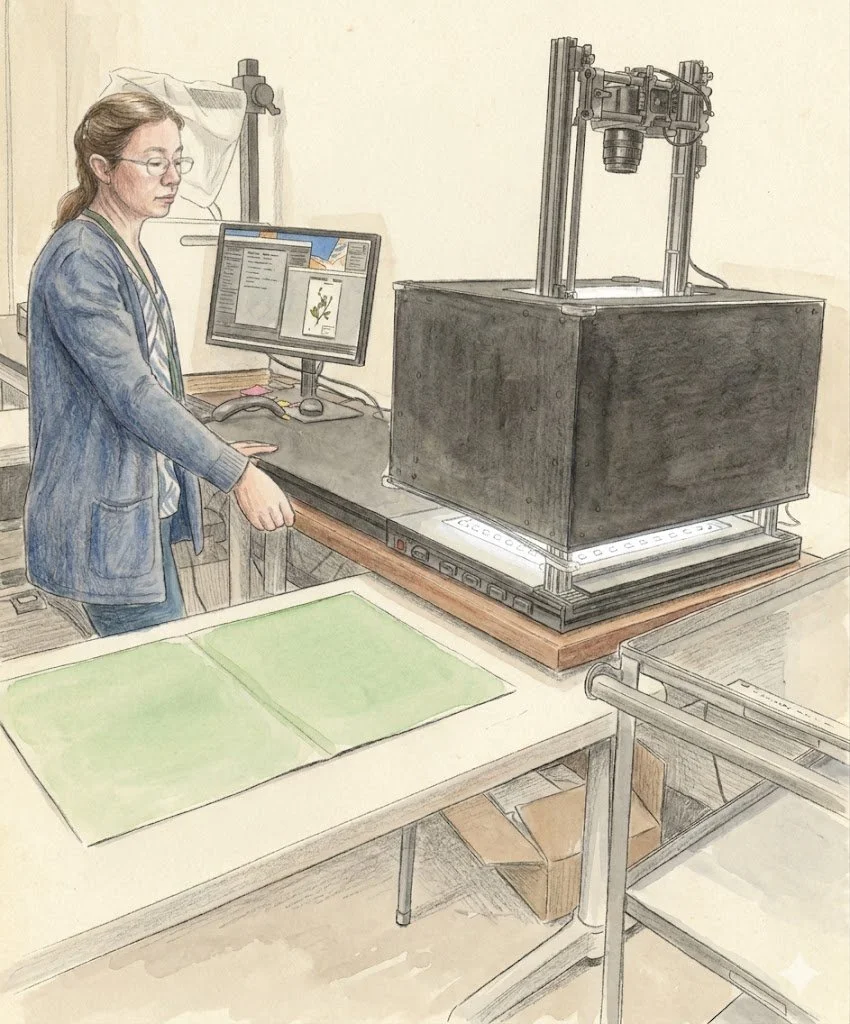
Lindsey Worcester demonstrating the digitizing plant specimens
We then moved to the digitization station to see how these physical sheets are uploaded into a global database. The setup features a high-resolution camera mounted over a light box, with a specialized slot beneath to position each specimen perfectly for direct transfer to the computer.
Lindsey provided a fantastic list of the open-source portals where these specimens are made available online to researchers and the public worldwide:
Morton Arboretum Database (bol.mortonarb.org)
SEINet (swbiodiversity.org/seinet/index.php)
Global Biodiversity Information Facility (gbif.org)
vPlants (vplants.org/portal/index.php)
As a grand finale to an incredible day, Lindsey opened all the cabinets on both sides of a row of the collection that is housed in warehouse style stacks.
The Chronology of the Herbarium
The First 'Dry Garden' (Hortus Siccus) c. 1544
Italian physician and botanist Luca Ghini is widely credited with inventing the herbarium. As a professor at the University of Pisa, he began pressing plants between sheets of paper, drying them, and pasting them onto cardboard. He called this a hortus siccus (dry garden). Though his original collection is lost, his method revolutionized botanical teaching.
Spreading Across Europe, Late 16th Century
Ghini's students spread the practice throughout Europe. One student, Gherardo Cibo, created the oldest surviving herbarium around 1550, which features specimens accompanied by meticulous watercolor landscapes. The term herbarium was eventually popularized by French botanist Joseph Pitton de Tournefort around 1700.
Carl Linnaeus and the Loose-Leaf Revolution, 1753
Before the mid-18th century, herbaria were kept bound in fixed books. Carl Linnaeus, the father of modern taxonomy, realized this made it impossible to insert new discoveries in their proper biological order. He pioneered the practice of mounting single specimens onto loose-leaf sheets filed in cabinets, creating a modular, expandable system.
The Golden Age of Scientific Exploration, 19th Century
As European empires launched massive voyages of discovery, herbaria became central to processing the world's flora. Collectors like Alexander von Humboldt, Charles Darwin, and Joseph Dalton Hooker sent tens of thousands of dried specimens back to centers like Kew Gardens in London, standardizing rigorous collection data (date, location, habitat).
The Modern Digital Herbarium, 21st Century
Today, herbaria are undergoing massive digitization efforts. High-resolution imaging allows researchers worldwide to examine delicate historical sheets online. Furthermore, scientists can now extract fragmented DNA from centuries-old dried leaves to map plant evolution and track environmental shifts.
Herbarium Method of Collecting and Preserving Specimens
1. Collection and Cleaning:Immediate.
Select a healthy, representative plant. Ideally, it should include flowers, fruits, stems, and both sides of the leaves. Carefully shake or rinse off any dirt from the roots, and pat the plant completely dry.
2. The Layout and Pressing:Before the plant wilts.
Place the fresh plant between sheets of absorbent paper (like newsprint). Arrange it carefully: lay some leaves flat facing up, and turn a few over to show the underside. Carefully spread out flowers so their internal structures are visible. If a stem is too long, bend it into a sharp 'V' or 'W' shape.
3. Drying and Curing: 2 to 4 days.
Sandwich the paper-enclosed plant between cardboard ventilators and place it into a wooden plant press. Strap the press down tightly. Apply gentle heat or ventilation; drying the plant quickly prevents mold and preserves the organic green hues and delicate petal structures.
4.The Layout Design:Archival stage.
Once fully dry, place the brittle plant onto a standard sheet of heavy, acid-free archival paper (traditionally 11.5 x 16.5 inches). Before adding glue, arrange the plant to leave the lower right-hand corner completely clear for the scientific identification label.
5. Mounting and Securing:Final preservation.
Carefully apply archival water-soluble glue to the back of the plant, or use thin strips of archival gummed linen tape to strap the heaviest stems to the paper. Weigh the specimen down with small sandbags or heavy washers until the adhesive cures completely.
Because dried specimens become incredibly fragile, heavy fruits or loose seeds that fall off the stem during the pressing process are never thrown away. They are placed inside a small paper fragment pouch glued directly to the upper left corner of the sheet.
Morton Arboretum Collection
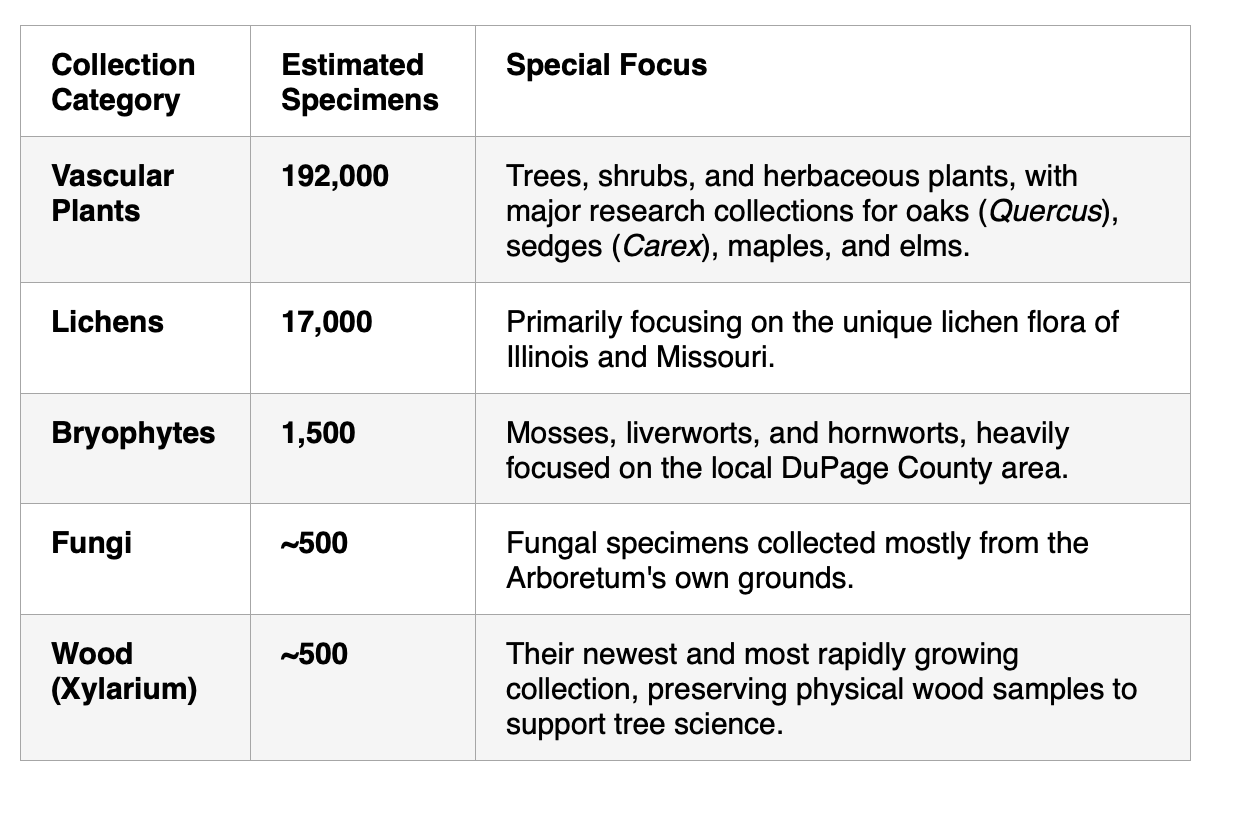
Estimate of the herbarium collection at Morton Arboretum
*this blog was written with the assistance of AI Google Gemini