
Preserving the Legacy: Spring Ephemerals at Reed-Turner Woodland
A Walk with Sarah Schultz at Reed-Turner Woodlands
By Louise Daley*
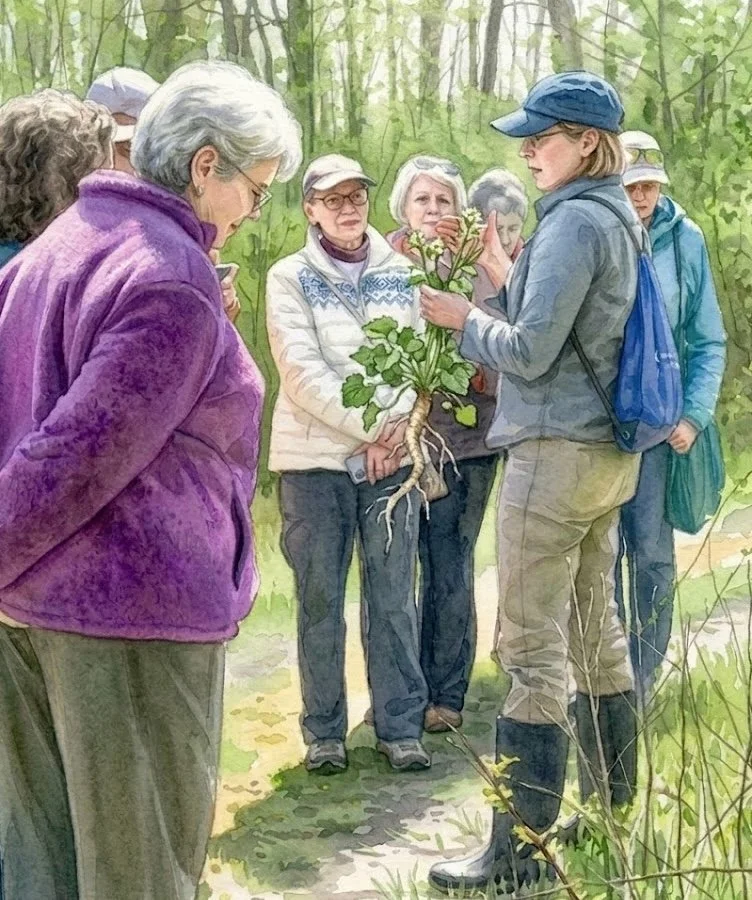
Sarah Schultz with Reed-Turner Botanical Artists
On April 25, 2026, members of the Reed-Turner Botanical Artists followed their morning meeting with an journey into the 50-acre Reed-Turner Woodland led by Sarah Schultz, a veteran steward with over 25 years of ecological experience.
A poignant highlight was visiting the memorial plaque of Barbara Turner, located on the very site where her home once stood. It was Barbara’s vision and leadership that transformed this land, leading to its status as a dedicated Illinois Nature Preserve in the 1980s. Today, her legacy lives on through the 500+ plant and tree species that thrive here.
The morning’s lesson focused on native woodland ephemerals—the "sweet little flowers" that define the season. These plants are called "ephemeral" because they are here for a fleeting moment in spring and then gone. Because they take a long time to establish and rely on intricate subterranean relationships with other organisms, finding a place with such high density is incredibly special.
The "intricate subterranean relationships" of many of these plants often involve mycorrhizal fungi. These plants don't just sit in the dirt; they are plugged into a fungal network that trades sugar from the plant's brief period of photosynthesis for minerals gathered by the fungi.
When the leaves yellow and disappear in June, the plant isn't dying—it is simply retreating into these specialized rhizomes and corms to wait for next April.
Sarah, who is the lead volunteer steward at both Reed-Turner and Heron Creek, emphasized the ongoing work required to protect these delicate natives. She has been a restoration volunteer for over 20 years, focusing heavily on removing invasive threats.
As April turns to May, the woodland floor changes dramatically. For those who attended, the walk was a vital reminder that the beauty of the preserve is a living, breathing gift

Rue Anemone (Thalictrum thalictroides) This plant features a whorl of delicate, white-to-pinkish sepals (which look like petals) surrounding a cluster of yellow stamens. Its leaves are three-lobed and reminiscent of meadow rue, held on thin, wiry stems that tremble in the slightest breeze.
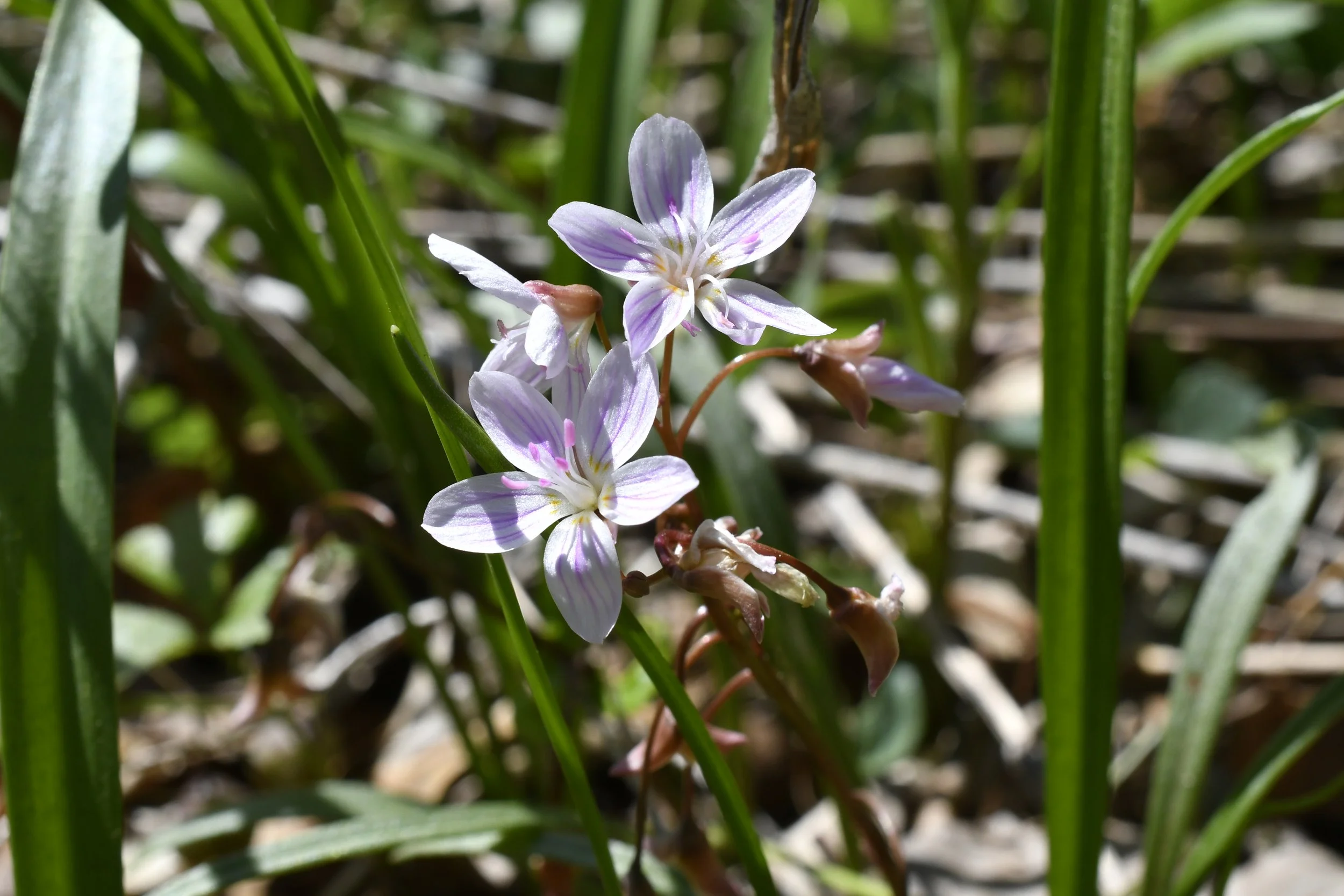
Spring Beauty (Claytonia virginica) A dainty, low-growing flower with five petals that are white to pale pink. Each petal is etched with fine, dark pink "nectar guides" that lead pollinators to the center. They have narrow, grass-like leaves that blend easily into the woodland floor.
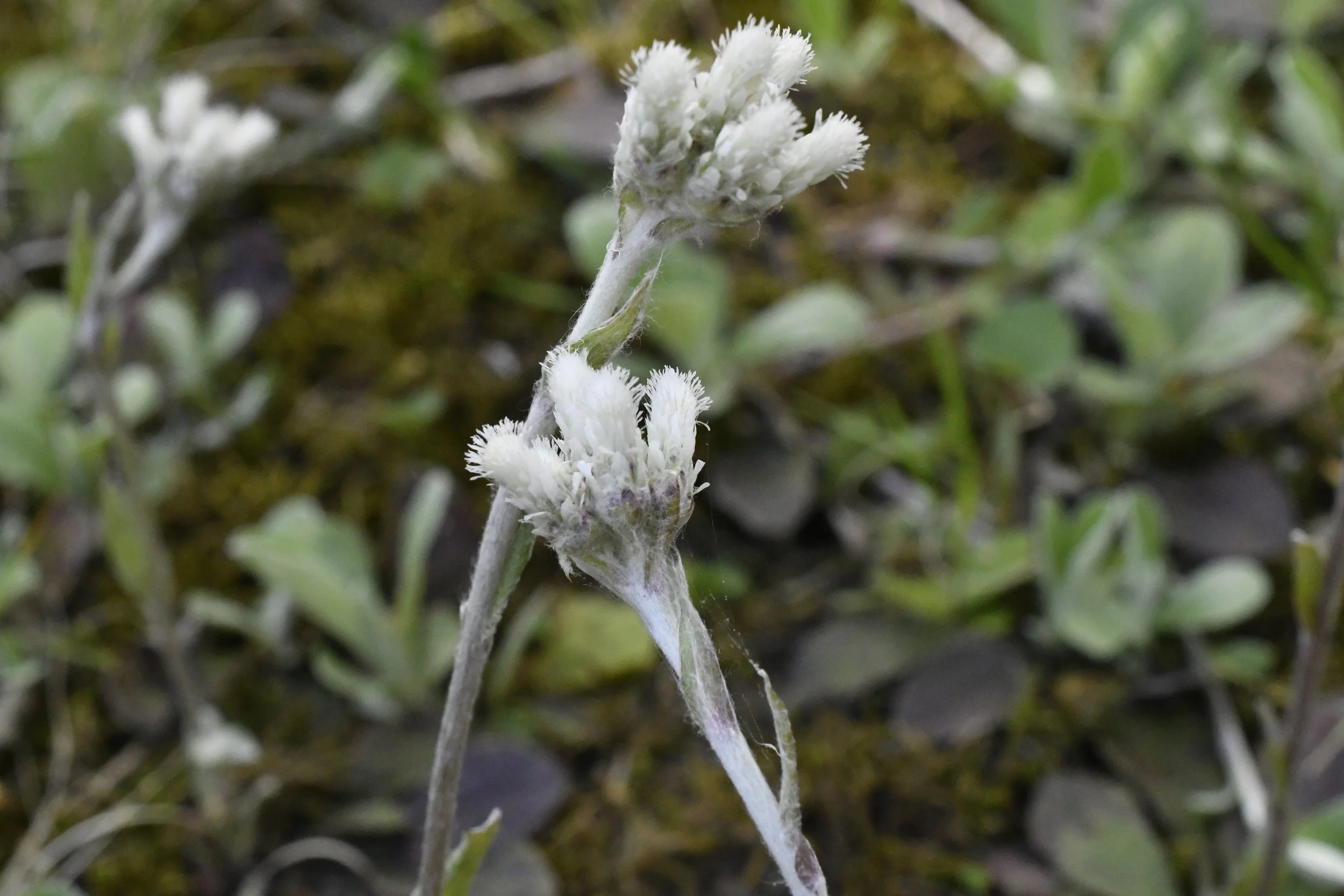
Pussytoes (Antennaria plantaginifolia): True to their name, the flower heads resemble the soft, velvety pads of a kitten’s paw. They appear as clusters of small, fuzzy, white-to-pinkish tubular flowers held atop silvery-green stems that rise 4 to 10 inches high. The foliage at the base is particularly striking: broad, oval, fuzzy leaves that form a low-growing mat or "rosette." The underside of the leaf is often distinctly silvery-white. Not considered true spring ephemerals, though they are often grouped with them because they bloom at the same time.
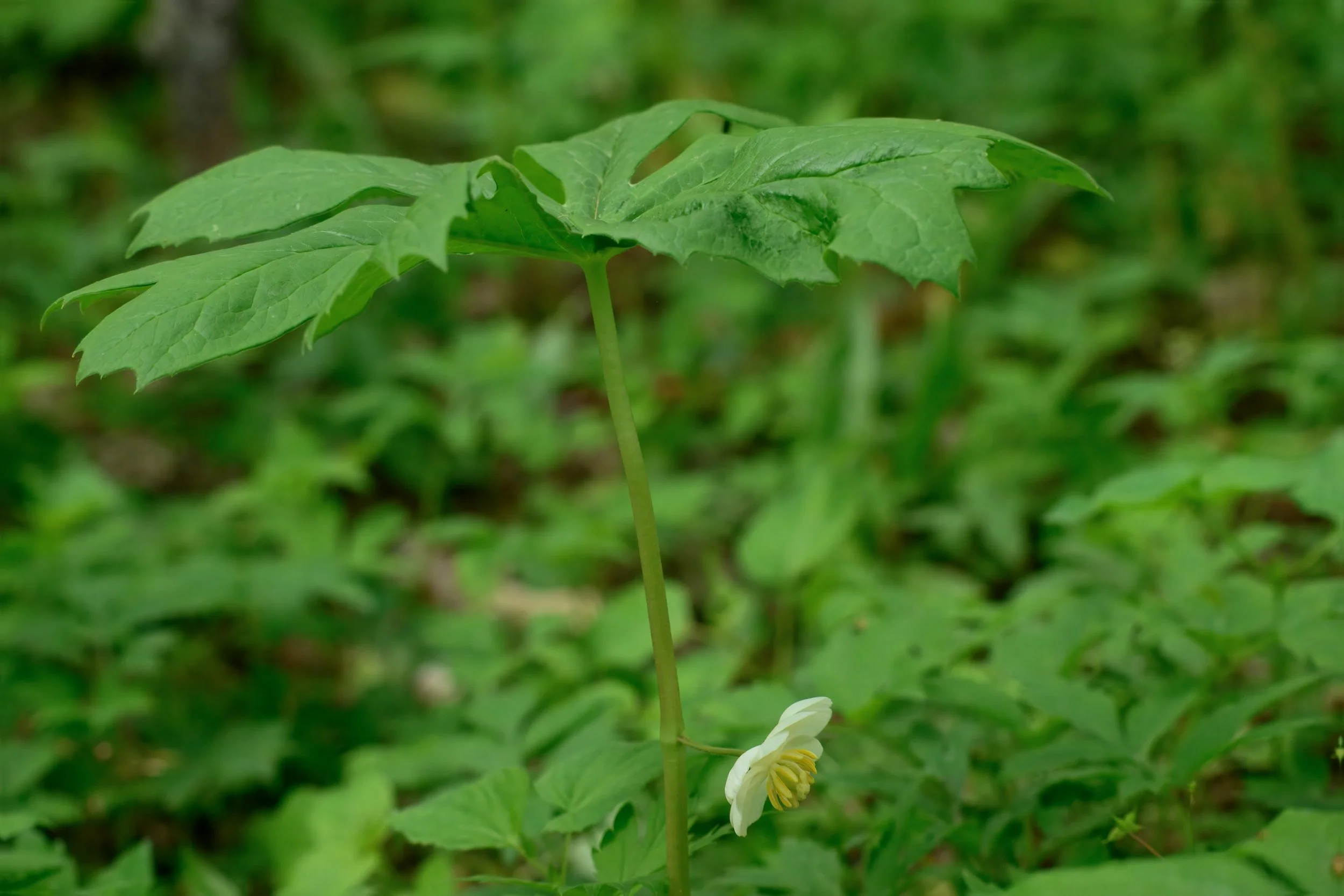
Mayapple (Podophyllum peltatum) Recognizable by its large, umbrella-like leaves that can reach up to a foot across. A single, waxy white flower with six to nine petals hides beneath the leaf canopy, eventually producing a green, lemon-shaped fruit.
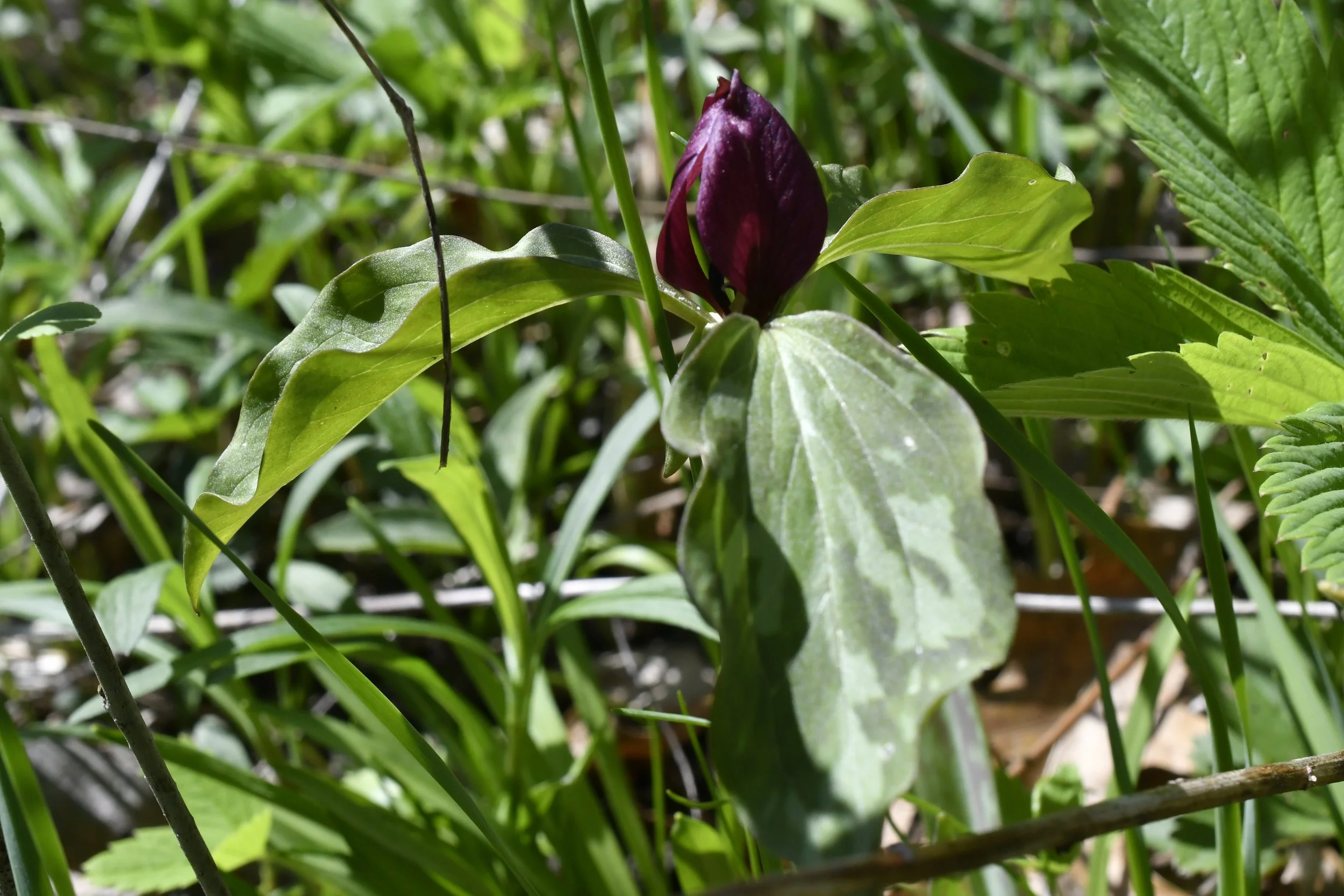
Red Trillium (Trillium erectum) Also known as "Wake Robin," this plant follows a strict rule of three: three broad, pointed leaves and three deep maroon-to-red petals. The flowers have a slightly foul scent designed to attract carrion flies for pollination.
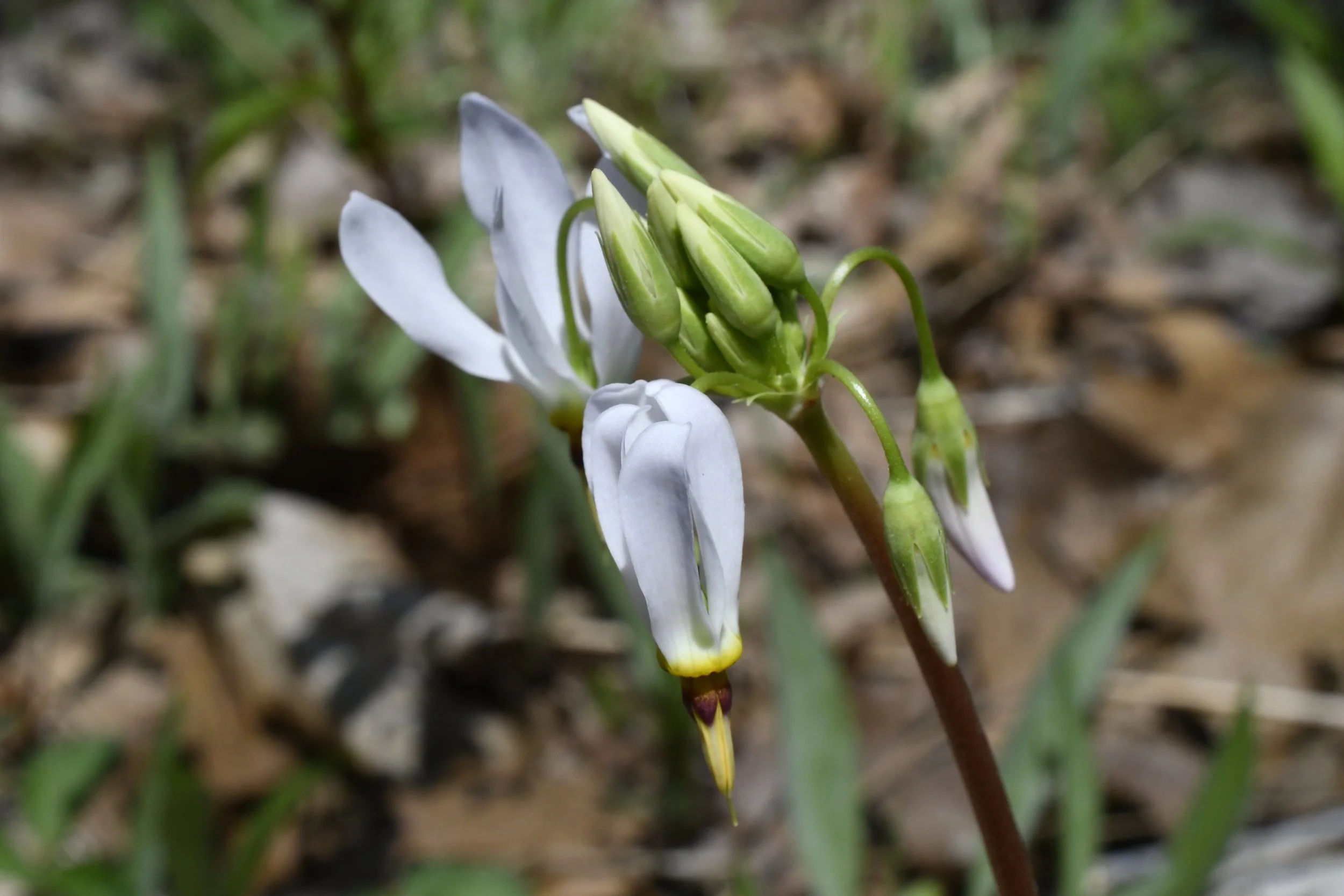
Shooting Star (Dodecatheon meadia) The flowers are structurally unique and look like miniature rockets or falling stars. Each stem carries a cluster of nodding flowers with petals that are swept backward (reflexed), exposing a pointed "beak" of yellow and purple stamens. The petals can range from brilliant white to a soft, ethereal lavender-pink.
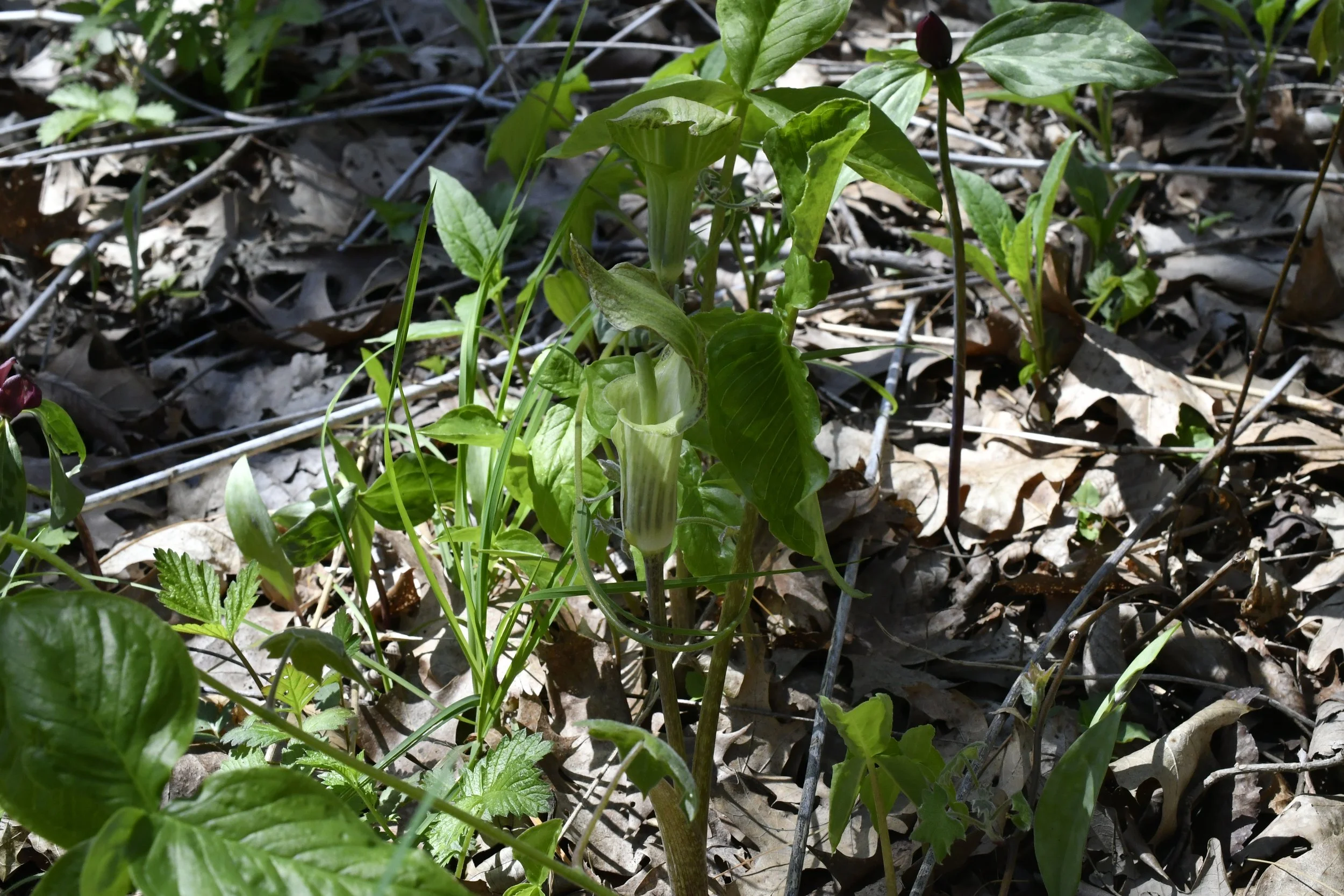
Jack-in-the-Pulpit (Arisaema triphyllum) A master of woodland architecture. The "pulpit" is a hooded spathe, often striped with deep purple or green, which encloses the "Jack"—a cylindrical spadix. Its large, trifoliate leaves usually stand taller than the flower itself.
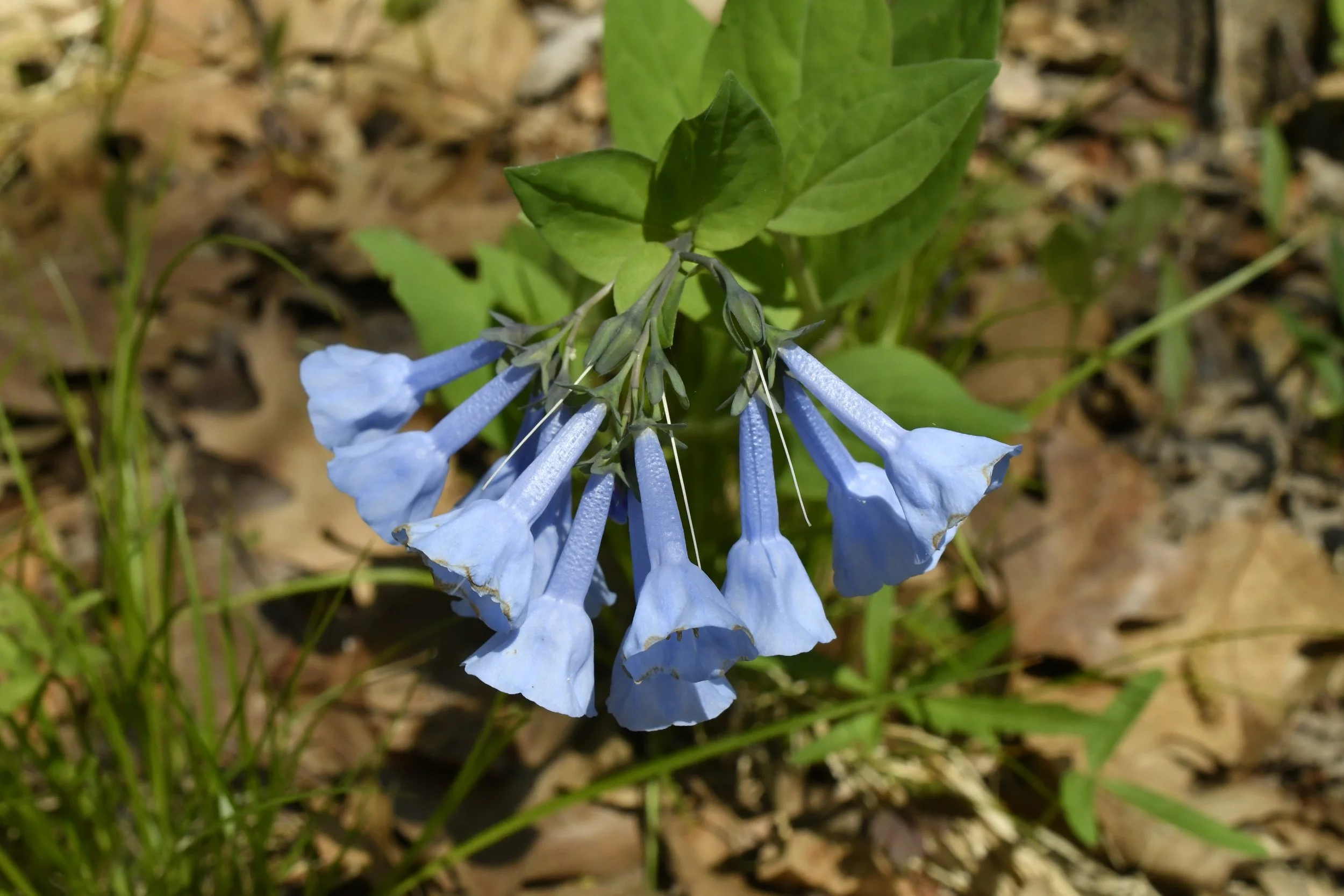
Virginia Bluebell (Mertensia virginica) These plants are famous for their color transformation; the buds often start as a delicate pink before opening into drooping, bell-shaped clusters of sky-blue flowers. Their foliage is smooth, oval, and has a soft, grayish-green hue.
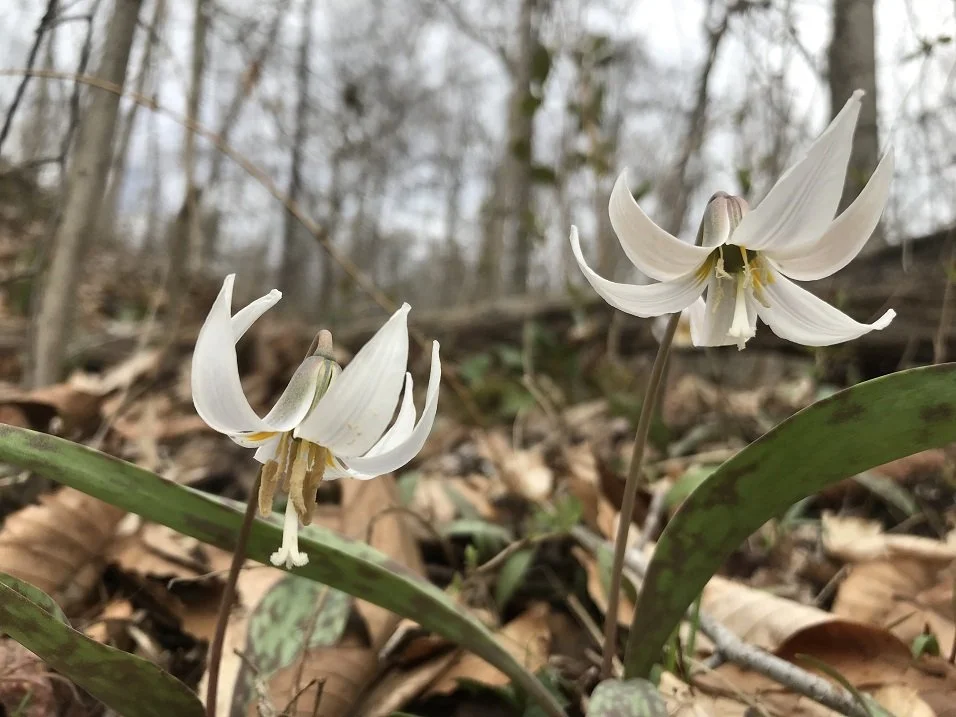
Trout Lily (Erythronium americanum) The flower is a solitary, nodding bell with six petals (technically three petals and three sepals, called tepals) that curve backward as the flower matures, exposing beautiful brownish-red anthers. The plant gets its common name from its striking foliage: two basal leaves that are heavily mottled with maroon-to-purplish splotches, resembling the markings on a brook trout.
*this blog was written with the assistance of AI Google Gemini